Farming Simulator 25 mods
76,030 results- 15 per page
- 30 per page
- 45 per page
- 60 per page
-
See more per page
Bigger pages, fewer clicks - and no ads anywhere.
Go Pro



LGM25 StoreCategory v1.0
Creates new categories in the store for Farming Simulator 25. Will be used for all placeables created by LGM.


Realistic Water & Soil Management (RWSM) v1.3.8.7
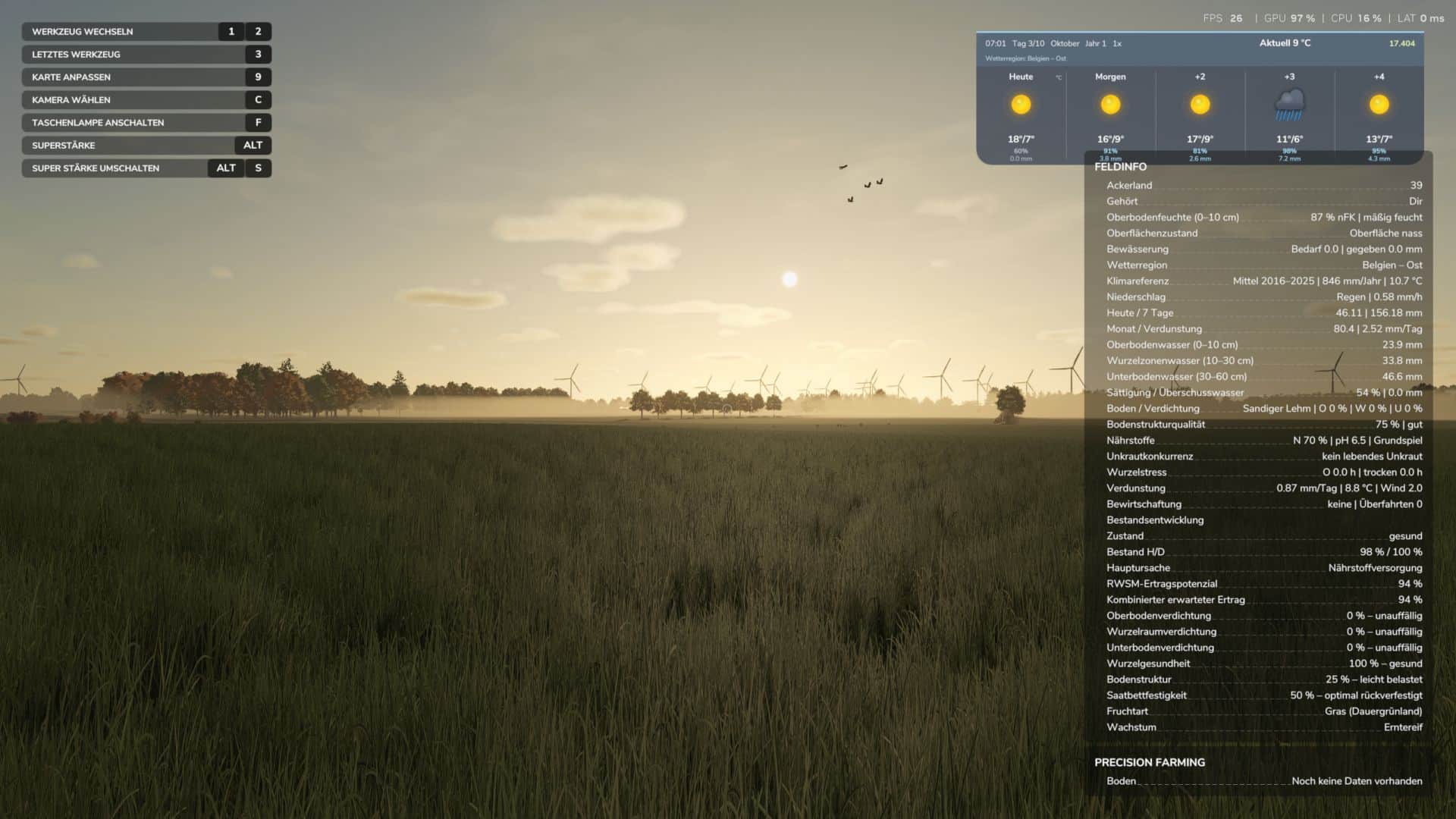
Realistic Water & Soil Management – RWSM **Realistic Water & Soil Management*expands Farming Simulator 25 with a permanently stored water, soil and plant balance. Rain, irrigation, evaporation, soil type, terrain, compaction, tire pressure, tillage and plant development are directly intertwined. As a result, fields no longer only react with simple conditions such as “dry” or “wet”, but rather have a multi-layered water balance with topsoil, root zone and subsoil. Natural depressions stay moist longer, heavy vehicles compact wet soil more and inadequate tire pressure increases the load on the topsoil. These influences have long-term effects on soil structure, root health, plant development and yield. Features – Multi-layered water balance The soil water balance is calculated separately for: – Topsoil from 0 to 10 cm – Root zone from 10 to 30 cm – Subfloor from 30 to 60 cm Precipitation, irrigation, evaporation, seepage, drainage, surface runoff, plant water absorption, soil type, soil structure, compaction and landform are taken into account. The usable field capacity is displayed separately from the complete pore saturation. Water above field capacity appears as excess water and can seep away, run off or cause waterlogging. Different soil types RWSM differentiates between different types of soil with their own properties, including: – loamy sand – sandy loam – clay – silty clay Each soil type has its own values for field capacity, wilting point, water retention, infiltration, drainage, bearing capacity, risk of compaction and sinking depth. Sandy soils dry faster. Loamy and clay-rich soils store more water, but remain soft longer and are at risk of compaction. Dynamic weather and climate – Regional climate profiles influence: – Precipitation – Temperature – Evaporation – Wind – Humidity – Sunlight exposure – Seasonal distribution The game’s actual weather data directly affects soil moisture, drying and evaporation. Realistic drying Drying does not take place via a simple timer. Temperature, wind, sun, humidity, soil type, compaction and surface water determine the speed. A wetness memory prevents a field from becoming completely dry and viable again immediately after rain. Natural depressions and waterlogging – RWSM detects local low areas within a field. These areas: – collect water – dry more slowly – have lower load capacity – promote sinking and track formation – increase the risk of compaction – can cause oxygen deficiency to the roots The terrain evaluation is cached for better performance. Soil compaction The compression is saved separately for: – Topsoil – Root space – Underbody Have an influence: – Vehicle weight – Payload – Wheel load – Axle load – Tire width – Tire pressure – Recommended field pressure – Soil moisture – Soil type – Slip – Speed – Cornering – Multiple crossings High tire pressure puts greater strain on the topsoil for the same wheel load. A suitable low field pressure increases the contact area and protects the ground. High axle loads can still compact deeper soil layers. Multiple crossings – Repeated crossings of the same lane are taken into account. The first crossing usually causes the greatest immediate damage. Further passes further compact the already contaminated soil. Among other things, the following are saved: – Crossings – Compaction – Track depth – Shear damage – Plant damage – Edit history Roots and plant stress RWSM simulates: Root health Fine root health achievable root depth Drought stress Waterlogging Lack of oxygen Compaction stress Nutrient stress pH stress mechanical damage Damaged roots are less able to absorb water and nutrients. Impact on earnings The actual yield is influenced, among other things, by: Water balance Dryness Waterlogging Root health Compaction Soil structure Nutrients pH value Seedbed Weeds Lanes mechanical damage Damage does not take full effect immediately, but builds up depending on the strength and duration. Crop Vitality Visuals (Alpha Version) A stored vitality system creates local differences in the plant population. Possible are: different plant heights changed stock density incomplete stocks Visible stress zones weaker development Storage locations The plants remain technically ready for harvest. RWSM does not alter original growth or harvest maturity levels. Weed competition Weeds compete with cultivated plants for water, nutrients, light and development space. Strong weed pressure can reduce development and yield.Tillage Different devices have different effects: Plow Cultivator Disc harrow Rotary harrow Subsoiler Seeder Roller Working depth, soil moisture, compaction, soil structure, seedbed strength, multiple cultivation and possible plow soles are evaluated. Deep loosening is only fully effective when the soil moisture is suitable. Cultivating when the soil is too wet can cause additional structural and lubrication damage. Seedbed and rollers RWSM evaluates seedbed strength. A seedbed that is too loose offers poor soil sealing. Too much reconsolidation can impair air flow and root development. Rolling acts as a real area-wide reconsolidation and is evaluated depending on the type of soil, moisture and compaction. Irrigation system The mod includes a functional Rainstar irrigation system with: Motor pump Hose reel Sprinkling rail adjustable pump pressure adjustable radius real application rate Water consumption Soil input in millimeters automatic hose retraction Work and transport mode Parking brake Clutch aid Connection markers sound visible water jet The water applied changes the actual water balance of the soil. Extended field info The field info shows, among other things: Topsoil moisture Pore saturation Surface condition Excess water Water in all layers of soil Soil type Evaporation Temperature and wind Compaction Soil structure Seedbed strength Root condition Plant vitality visible height and density main cause of stress Climate values Water-Soil API RWSM provides a versioned interface for other mods. The API provides, among other things: Soil type Soil moisture Pore saturation water available to plants Surface moisture Carrying capacity Trafficability Sink factor possible sinking depth Compaction Track depth Root condition Evaporation recommended tire pressure Plant vitality Other mods can report traffic loads and ground effects back to RWSM. Connection with Visual Mud Tracks In connection with Visual Mud Tracks, among other things, the following are transmitted: Wheel load Axle load Tire pressure Tire width Slip Vehicle weight Payload Soil moisture Carrying capacity Sink factor possible track depth This allows visible tracks, sinking, mud and tire behavior to be linked to the actual ground condition. Saving and multiplayer The following are permanently stored and synchronized, among other things: Water balance Precipitation history Compaction Track depth Soil structure Root condition Edit history Plant vitality Irrigation data Pump pressure Irrigation radius Hose retraction The calculation is server authoritative and designed for multiplayer saves. Highlights 1. **Multi-layered water balance** Topsoil, root zone and subsoil react separately to rain, irrigation, evaporation and infiltration. 2. **Long-term compaction with an impact on yield** Tire pressure, wheel load, axle load, soil moisture, slip and multiple passes influence the soil and plants in the long term. 3. **Direct connection to Visual Mud Tracks** Soil moisture and load capacity control sinking, tracks, mud and tire behavior. 4. **Local waterlogging in natural depressions** Low areas stay wet for longer and become real problem areas. 5. **Visible Plant Vitality** Elevation, density and stress zones can vary locally without changing crop maturity. 6. **Realistic tire pressure influence** Excessive pressure increases topsoil stress, while appropriate field pressure protects the soil. 7. **Root Health and Long-Term Plant Stress** Dryness, waterlogging, compaction, pH value and nutrients work together. 8. **Functional irrigation** Pump pressure, radius and application rate determine the real water input. 9. **Different tillage systems** Plows, cultivators, subsoilers and rollers have their own effects and risks. 10. **Extensive field info** Water, soil, compaction, roots, seedbed and plant condition are directly visible. 11. **Persistent Multiplayer System** Ground and water damage is retained and synced after saving. 12. **Open Water-Soil API** Other mods can read land values and connect their own systems to them. 13. **No change in growth stages** RWSM assesses and visualizes plant stress without overwriting original harvest maturity levels. V1.3.6.4 New weather HUD Added modern weather HUD in weather app style. Multi-day weather forecast supplemented with symbols for sun, clouds, rain, heavy rain, thunderstorms, snow, hail and frost. Added current temperature and daily high and low temperatures. Probability of rain and forecast amount of precipitation in millimeters for today and the following days added. Added two weather icons for weather changes within a day. Weather region and climate region added. Added understandable month names instead of internal game periods. Account balance, time, date, year and time acceleration integrated into the display. Added choice between the original LS25 weather HUD and the enhanced RWSM weather HUD. Weather texts added in all existing languages. New RWSM in-game map menu Added custom RWSM category in existing LS25 map view. The following map levels added: soil moisture Navigability Topsoil compaction Root area compaction Subsoil compaction Waterlogging and drought stress Root health Earning potential Irrigation history Added custom color legends for all map layers. Local representation of actually irrigated, compacted or damaged areas added. Active crops are recognized directly from the game’s existing fruit and growth data. Added new neutral map class “Culture present – ​​not yet locally assessedâ€. This class realistically indicates that a culture exists, but there is not yet enough local RWSM data for a reliable assessment. Once sufficient information on soil, water, compaction and plant development is available, the neutral condition is automatically replaced by the actual local assessment. Missing data is no longer represented as optimal root health or 100 percent yield. Added persistent card values ​​for savegames and multiplayer. Map, tab and legend texts added in all existing languages. V1.3.8.7 – fixed version – Major performance conversion, event-based vehicle register, work area optimization, weed cache, shared RWSM/VMT wheel contact core and fix of the critical wheel contact Lua error – Comprehensive reconstruction of the actual soil model: three-layer water balance, infiltration, runoff, deep drainage, Kc, TAW/RAW/Ks, dynamic root depth, frost, soil structure and seasonal yield – Multiplayer/Sync level B, quantized network data, terrain/density callback broker with VMT, only purchased real fields, streets hidden and event-driven ground calculation instead of permanent full field queries. – Consistent conversion against the seed machine FPS drops. Chunk-based processing and finally no more RWSM WorkArea geometry for Seeder/Planter – Field info revised: nFK, three water layers in mm, irrigation requirements, understandable soil status, adaptive scaling and concrete soil improvement recommendations. The Lua syntax error has been fixed. – Field info stabilized; in particular root health 0↔100% and changing compaction values were stabilized – New ground-following Rainstar hose and distance-independent auto-reel, so that the move continues even without a player right next to it. – Savegame start stabilization for Rainstar. 5-second protection phase prevents pulling impulses and the problem of the machine standing on its back or being unstable after loading. – GIANTS hose as a visibility fallback in case the new ground hose is not initialized correctly. – Fixed missing externalShapesFile reference so that the IrriFrance hose mesh actually loads Required: – Precision Farming – Visual Mud Tracks
HEMTT Oshkosh M978 Phalanx Radar Base v1.0
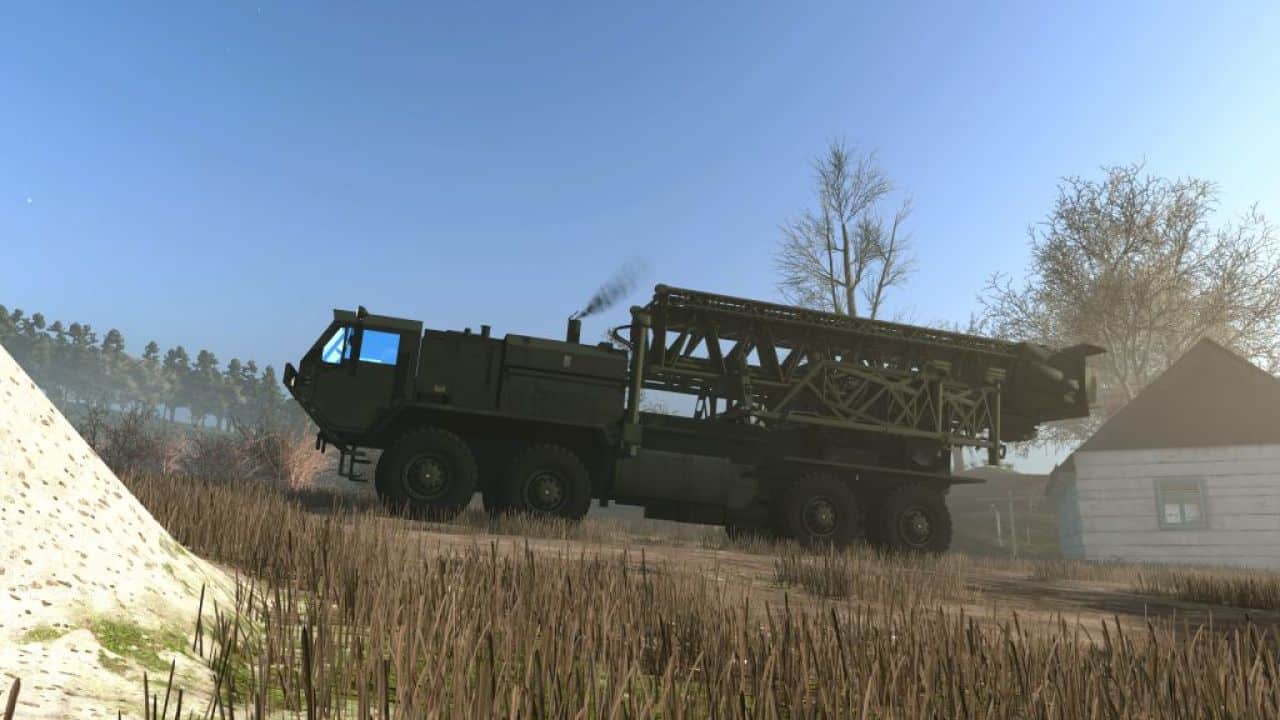
The HEMTT Oshkosh M978 Phalanx Radar Base is a hybrid system that merges a heavy tactical truck platform with advanced short‑range air defense and mobile radar technology. Base Platform (HEMTT M978): A heavy 8×8 tactical truck designed by Oshkosh Defense, originally configured as a fuel tanker. Its robust chassis, high payload capacity, and off‑road mobility make it suitable for carrying specialized military systems. Weapon System (Phalanx CIWS): The Phalanx Close‑In Weapon System integrates a 20 mm M61A1 Vulcan Gatling gun with autonomous radar for short‑range interception of missiles, rockets, and aircraft. Land‑based adaptations (Centurion C‑RAM) have proven effective in base defense roles. Radar Base Integration: – Adding a deployable radar antenna tower transforms the vehicle into a dual‑role platform: – Surveillance: extended airspace monitoring with elevated radar sensors. – Fire Control: direct targeting data for the Phalanx system. – Command & Communications: mobile node for battlefield coordination. Military Applications: – Convoy protection with integrated radar coverage. – Forward base defense combining detection and interception. – Mobile support for mechanized units, providing both radar surveillance and close‑in defense. Strategic Importance: This hybrid concept embodies modularity in modern warfare, where logistics trucks evolve into multi‑role defense platforms. By combining radar elevation with autonomous weaponry, the system enhances survivability against aerial threats and strengthens tactical flexibility in asymmetric environments.
Zetor ZTS 16245 Real Sounds v2.1
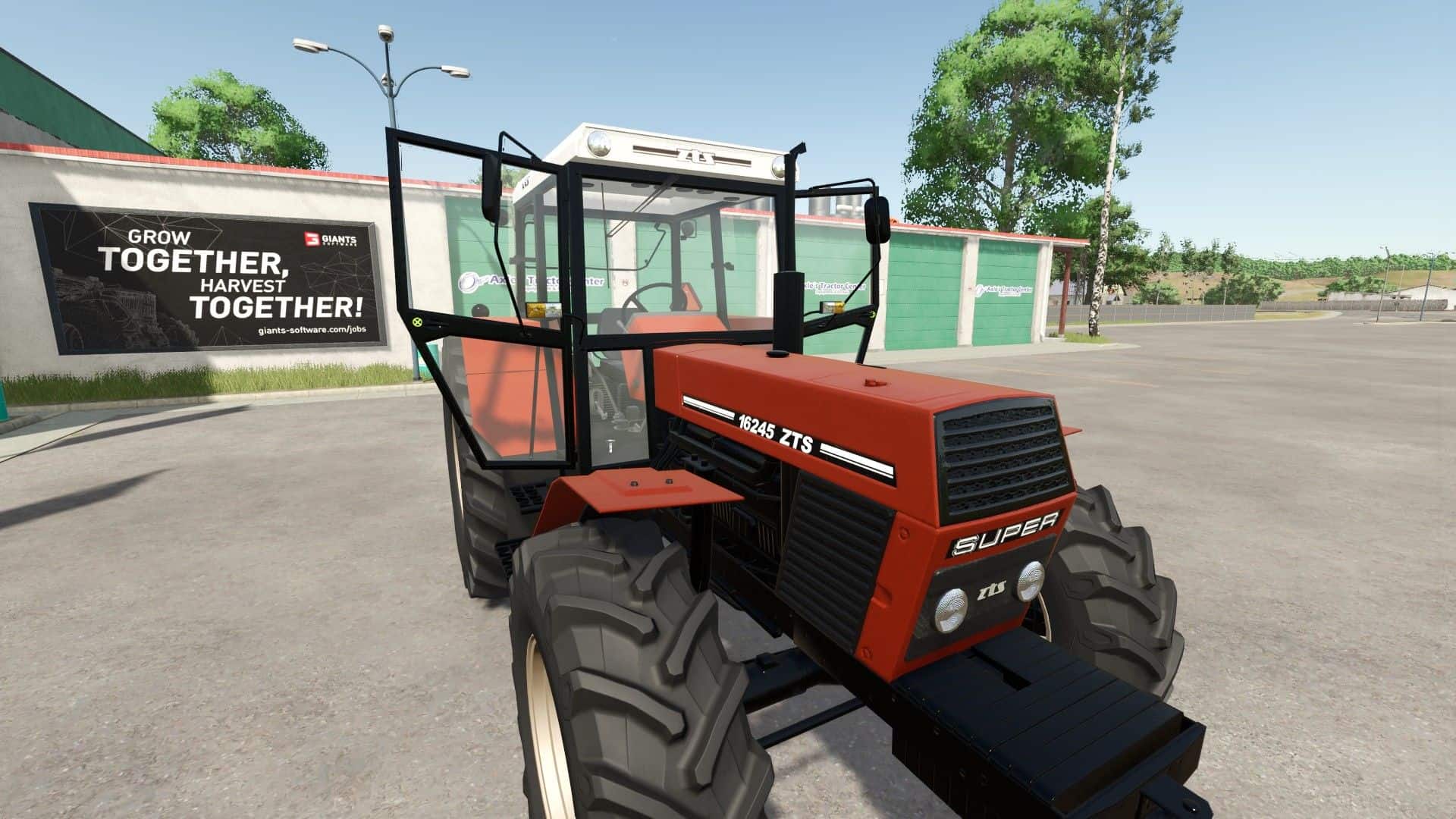
– Configurations: Front weights , wheels (Trelleborg , Michelin , Mitas,Nokian , Continental , BKT), Base color , chassis color, Roof Color , Cabin color , rims color, – Motor configurations 117 hp – 180 hp with manual transmission , motor configuration with CVT transmission with 300 hp (unreal) – optional . Frontloader Configurations , 3 point front hydraulic with PTO , animations , additional lights , and many more. – Interactive control V2.1.0.0 – Added wheels configurations for Michelin and Nokian tires – Removed duplicate rims on some of the wheels configs – Adjusted center of mass for front 3 point hydraulic Required: – Interactive Control
Visual Mud Tracks v1.3.7.1
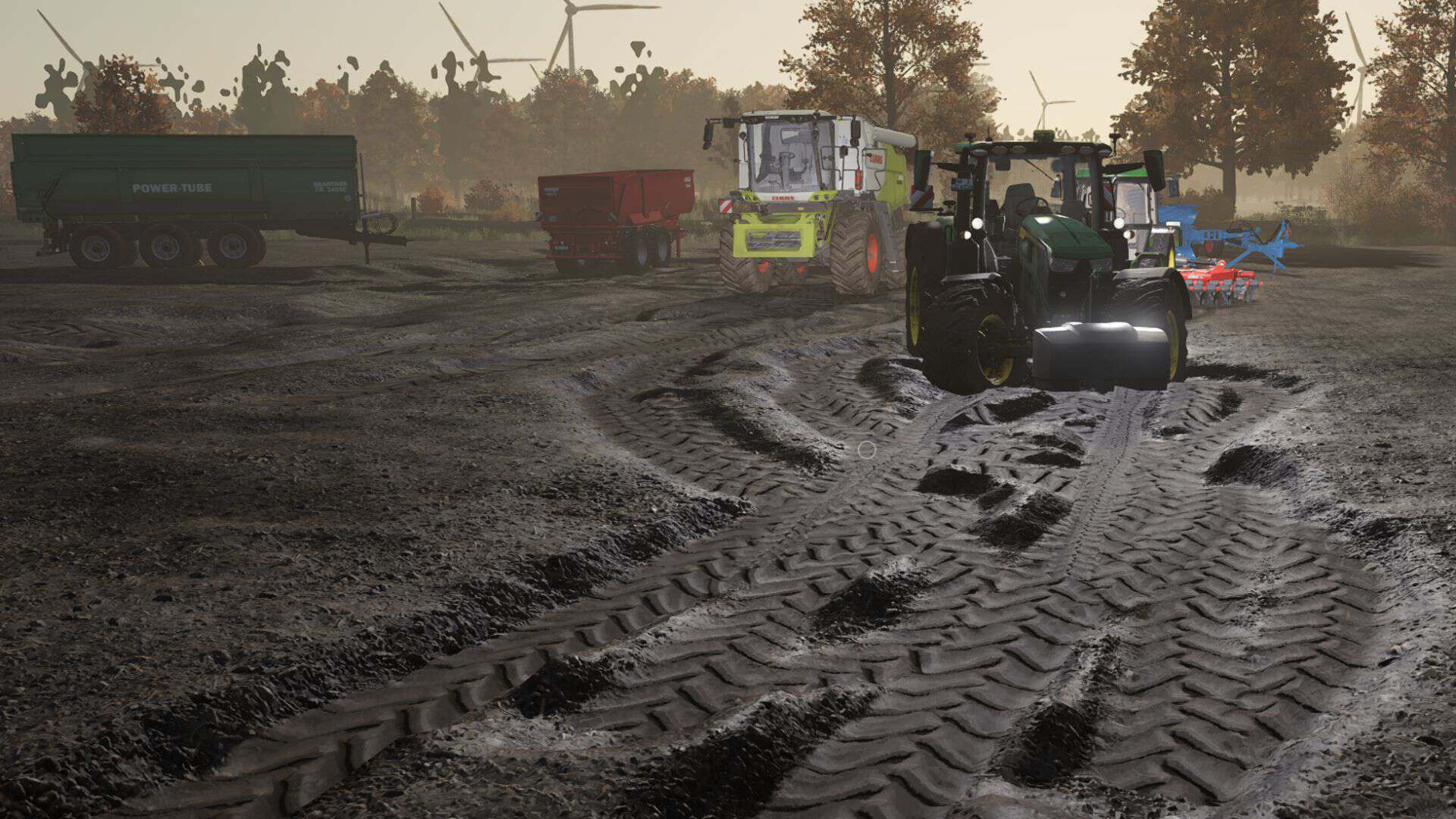
Description: Visual Mud Tracks expands Farming Simulator 25 with a comprehensive simulation of lanes, soil moisture, tire behavior, compaction, fruit destruction, root damage and bogging. This means that vehicles react much more realistically to dry, moist and water-saturated soils. The mod is designed for single player and multiplayer and can work with the **Realistic Water & Soil Management System**. Soil moisture, load capacity and waterlogging not only influence the display, but also tire contamination, sinking, slippage, driving resistance and plant damage. Physical lanes and terrain grooves Tires can permanently lower the terrain and create real grooves in the terrain heightmap. The depth and width of the tracks are calculated individually for each wheel. To be taken into account: – Vehicle weight – actual wheel load – Tire width and tire radius – Tire pressure – Soil moisture – Soil saturation – Carrying capacity – Speed – Wheel slip – Cornering – Number of previous crossings – Trailers, levels and attachments Left and right bike lanes remain separate. The center of the vehicle is not lowered unnecessarily. The grooves have a narrow, steep cross section so that the edge areas do not sink over a large area. Existing tracks can be deepened by further difficult crossings. A maximum depth protects the terrain from extreme deformation. The groove is created directly at the actual wheel contact. There is no delayed post-processing behind the vehicle. Steered, mirror mounted and differently aligned wheels are taken into account. Restoration through tillage Physical lanes can be removed again through appropriate tillage. The following are supported, among others: – Plows – Cultivator – Disc harrows – Subsoiler – Mulcher – Reels – Seeders – Direct seeding machines – Planters The terrain is only reset within the actual work area being worked on. Pending trace calculations and saved visual traces are also removed there. Safe Terrain Journal – The mod uses separate savegame files: – `visualMudTracksTerrainBackup.xml` – `visualMudTracksActiveRuts.xml` – `visualMudTracksState.xml` The original terrain height of a cell is saved during the first intervention and is not later overwritten by further passes. Active grooves and recovery information are managed separately. This allows tracks to be reset in a more controlled manner. Interrupted restores can be resumed the next time you start the game. Important note for updates: Before switching from an older version, existing lanes with the old version still installed should be removed using tillage equipment and the score saved. Grooves that have already been permanently written into the terrain height map may otherwise remain. Visible and physical sinking Tires visibly and physically sink on soft and wet surfaces. The sinking is implemented via the effective wheel physics radius. This means that the tires, suspension and ground contact react together. The sinking occurs progressively and not suddenly. On solid ground, the wheel lifts itself out of the ground in a controlled manner. The sinking depth depends on: – Soil moisture – Saturation – Carrying capacity – Wheel load – Tire width – Tire pressure – Speed – Slip – existing track depth Wide tires distribute the load better. Narrow, heavily loaded tires cut deeper. Tire pressure system The tire pressure can be changed while driving. The value is saved for each wheel and synchronized in multiplayer. Low tire pressure: – increases the contact area – Improves grip on soft ground – reduces cutting – can make it easier to get out of soft tracks High tire pressure: – reduces the contact area – increases cutting – increases the risk of getting stuck on wet ground – may be cheaper on solid ground A compact HUD shows the current pressure in bar and evaluates it in color. Soil moisture HUD and RWSM connection The Soil Moisture HUD shows the current RWSM topsoil value in percent. The display uses the same soil moisture value as the RWSM field info. Values above 100 percent can represent severe waterlogging or waterlogging. RWSM soil moisture affects: – Sludge content – Tire contamination – Particle effects – Carrying capacity – Sinking depth – Tire grip – Wheel slip – Groove depth – Danger of getting stuck – Fruit and root damage Increased soil moisture caused by irrigation can also change the soil physics. Tire dirt and mudThe amount of mud is stored individually for each tire. A tire remains dirty after leaving the field and cleans itself depending on the surface. – Asphalt cleans quickly – Gravel cleans slower – Clean dirt roads only slightly – high speed throws more mud out of the tread – Rain also washes off the tires – a light film of dirt may remain The particle effects distinguish between dry earth and wet mud. Included are: – fine dry soil particles – medium dry soil particles – fine wet splashes – medium mud particles – rare heavy mud lumps The amount of particles depends on wheel rotation, slip, tire width, radius, moisture, sink factor and load capacity. Particles are only generated when there is suitable ground contact. Progressive stuck physics On heavily waterlogged and less stable ground, a vehicle can progressively become stuck. Continuous slippage causes driven wheels to dig in further. At the same time, the transferable grip decreases and the driving resistance increases. To be taken into account: – Soil moisture and saturation – Carrying capacity – Wheel load – Tire pressure – Slip – Speed – Engine utilization – Engine speed – Tensile load – Working resistance – Duration of exposure Plows, cultivators, disc harrows, subsoilers, seed drills, power harrows and rollers produce different pulling resistances. Working width and working depth influence the power requirement. In extreme conditions, propulsion can be almost completely lost. Lifting or uncoupling an implement immediately reduces the additional load. Controlled reversing can reduce the digging condition and free the vehicle along its own lane. Soil compaction – Vehicles compact the top and bottom soil depending on wheel load, soil moisture, slip and number of passes. Included are: – Topsoil compaction – Subsoil compaction – Stronger compaction in wet soil – Multiple experiences – Additional load due to cornering and slipping – Plow sole for frequent plowing – Different effects of plow, cultivator and subsoiler – Targeted reconsolidation by rolling – slow biological recovery Compaction and soil structure can be viewed in the field info. Fruit destruction Plants in the immediate tire area may be damaged or completely removed. The native LS25 fruit destruction is used for this. The damage depends on: – Wheel load – Tire width – Soil moisture – Slip – Cornering – Growth stage – Root health – Soil structure – Number of crossings Young plants react more sensitively. Repeated crossings significantly increase the damage. Normal tires remove plants after several trips over the same spot at the latest. Detected maintenance tires reduce the damage, but do not prevent it completely if the vehicle is driven frequently. Root Health Each contaminated soil cell can receive its own root health value. Root damage occurs due to: – high wheel load – wet ground – strong slip – Cornering – Multiple crossings – unfavorable growth stages – compacted soil If root health declines, the risk of visible plant damage increases. – below 70 percent: increased sensitivity – below 40 percent: further crossings lead to destruction more quickly – less than 20 percent: very high risk of failure Root health is saved and can slowly recover biologically. Field info and settings menu The mod expands the field information to include numerous land values, including: – Soil compaction – Underbody status – Root health – Soil structure – Sink factor – Carrying capacity – Fruit and root damage The settings menu contains detailed descriptions of all options. High and low values, interactions, performance consequences and save game effects are explained. The menu texts are available in twelve languages: – German, English, French, Spanish, Italian, Dutch, Polish, Portuguese, Russian, Czech, Hungarian and Turkish. Multiplayer and performance The crucial physics calculations run on the server side. Tire pressure, contamination and important soil conditions are synchronized. To optimize performance, the mod uses: – limited groove points – adjustable storage intervals – Event and bulk caches – sleeping floor cells – Reduced refresh rates for removed or inactive areas – delayed safe initialization of the particle systems – Clean release of particle effects when deleting vehicles V1.3.7.1 – Tire shader fix – I’ve included all the individual changes and fixes, including runtime/LUA errors, stuck physics, multiplayer, tire/mud shaders, washing, particles, wet ground optics, RWSM compatibility, chunk storage and migration, as well as the complete seeder FPS fixes up to the complete removal of the seeders from the VMT work area paths. Required: – Realistic Water & Soil Management (RWSM)
- 15 per page
- 30 per page
- 45 per page
- 60 per page
-
See more per page
Bigger pages, fewer clicks - and no ads anywhere.
Go Pro