Farming Simulator 22 mods
47,884 results- 15 per page
- 30 per page
- 45 per page
- 60 per page
-
See more per page
Bigger pages, fewer clicks - and no ads anywhere.
Go Pro
Keno City V1.0.0.2
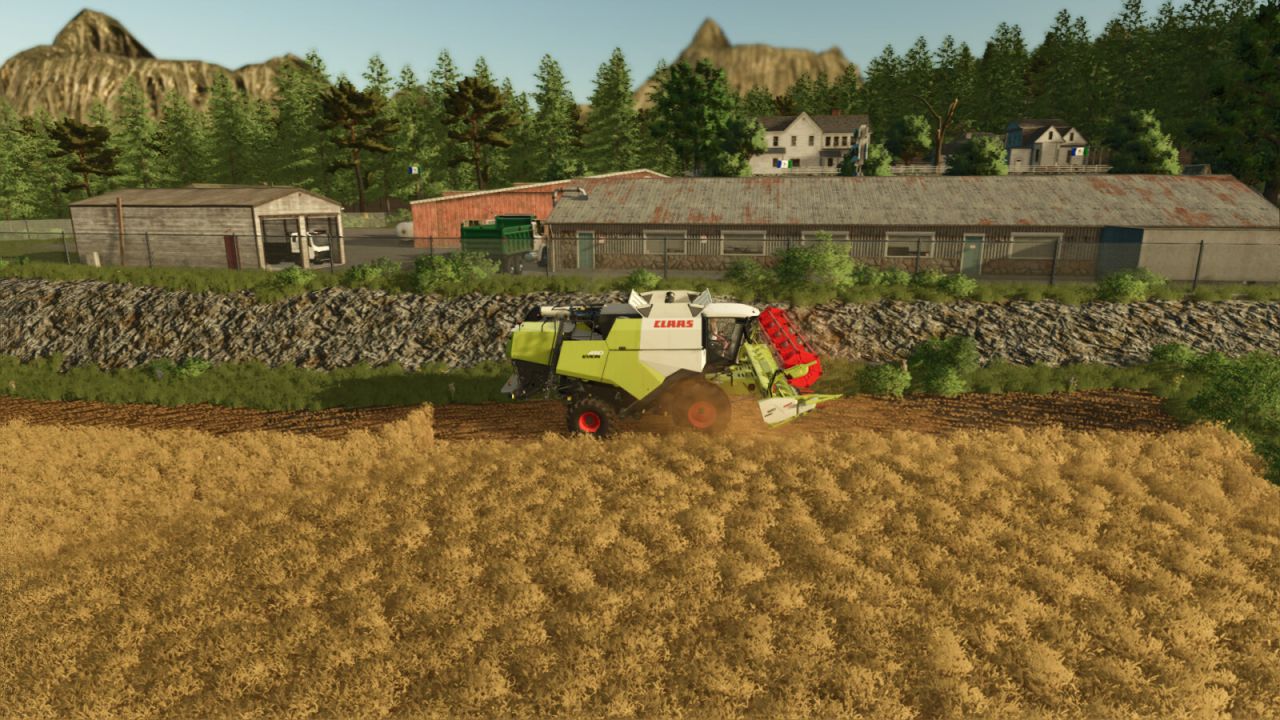
Changelog 1.0.0.2: – Fixed static issues with fences and decorations – Fixed dirt processor height – Fixed l10n -eng, fill types for pallets – Fixed map_filltype xml (FilltypeCategories) – Production cycles are now slower V1.0.0.1 – New map icon – You can now sell placeables at the starting farm (except for the farmhouse) – Implemented placeable animal stalls with a higher number of animals – Map works now with the Highland Expansion,i changed the name of “Coal” Welcome to Keno City. Keno City is a very small settlement in the heart of the Yukon Territory, Canada. Based on a near-realistic model, it has been transformed into a 4x map. Surrounded by dense forests, this region was once home to silver mining. More recently, this has been developing into gold mining. In addition to soil, there are also gold-bearing soils and sand as mining areas. All of these are processed in production: Silver ore and iron ore can be produced from soil. Gold can also be extracted from soil. Concrete can be made from sand. Two oil derricks supply crude oil. Features: Mining areas for soil, gold-bearing soil, and coal A lot of forest, also for your field expansion No fence around the farm, so you can expand as much as you like Containersellingstation Customized Environment.xml Production: Production of soil, ores, sand, and gravel Gold panning and smelting: produces gold flakes, gold bars, and silver bars Oil derricks: produce crude oil Refinery: produces propane gas and diesel Steel factory for steel and steel pipes and a view more There are: 8 cultivated fields with a total area of approximately 36 hectares 9 mining areas for soil, gold-bearing soil, and coal 80 farmlands in total, almost all of which include a forest area You can choose between 5 different map versions: 1. Keno City: Start with small, inexpensive equipment and 2 fields. 2. Keno City – Farmer: Start with slightly larger equipment and tractors, as well as 2 fields. 3. Keno City – Forester: Start with forestry vehicles and a forest, as well as small farm vehicles and one field. 4. Keno City – Miner: Start with a mining area, a truck, and a wheel loader. You also get small farm vehicles and one field. Please note: To avoid errors with the mining heaps: 1. A mining pit designation has been added, which describes which heap should be at this location.
Slurry Pipe System v1.0.1.5
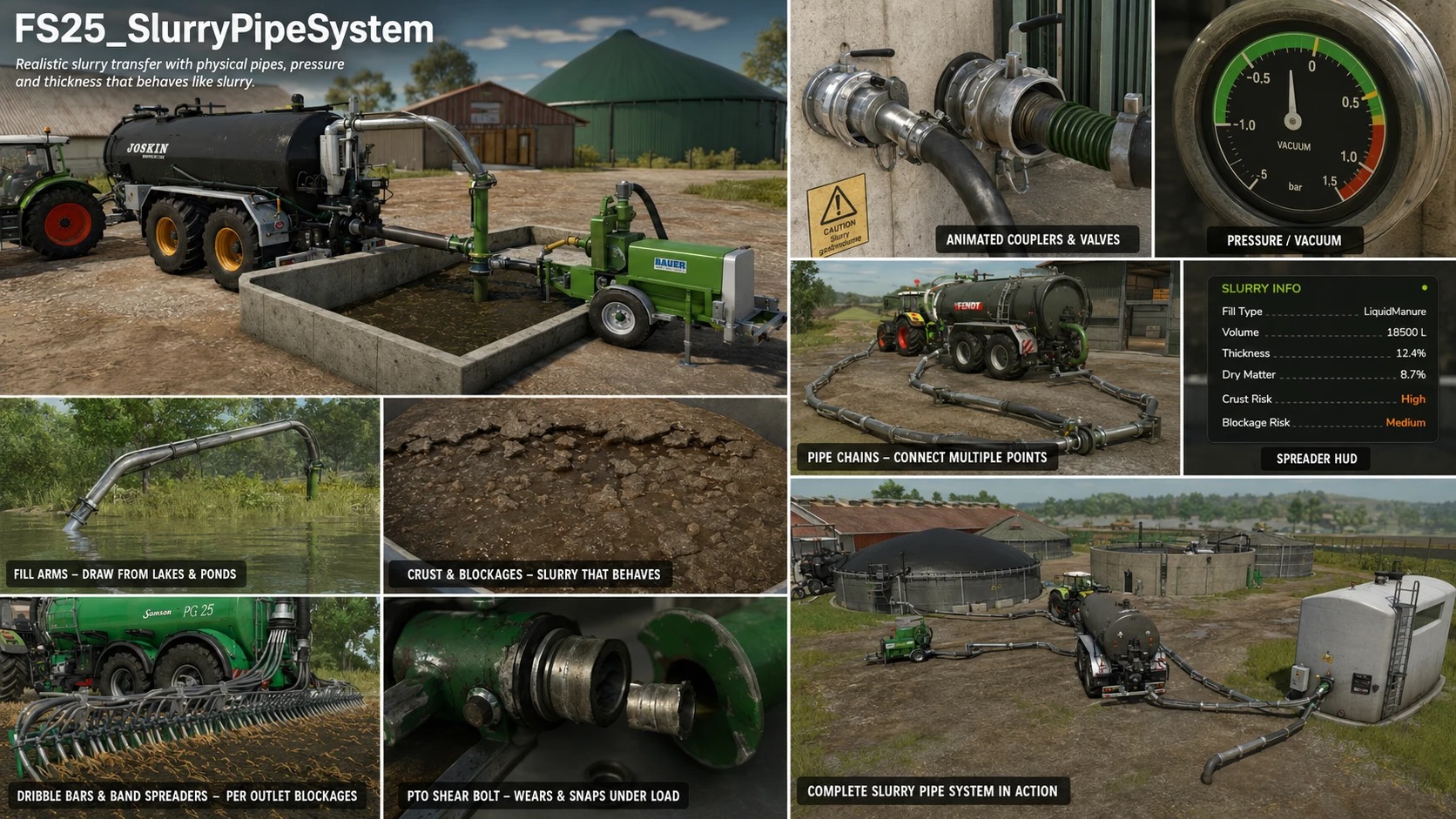
Slurry Pipe System v1.0.1.5 Release V1.0.1.5 Everything since V1.0.1.4. A small follow-up release: custom vehicle types that descend from none of the vanilla tanker families now work, and the tanker / fert-sprayer override families are kept cleanly apart. No config schema changes, savegames unaffected. Added Custom vehicle types — the safety net 1.0.1.4 taught SPS to walk a type’s parent chain, covering modder types derived from the vanilla tanker or sprayer families. This release covers everything else: a vehicle whose type descends from none of them (e.g. a modder’s own parent=”sprayer” or parent=”tractor” type, as in the LSFM Universal Tank Pack) but that registers through an embedded block now receives the tanker behaviour per-vehicle at registration. The declaration in the vehicle’s own XML is the authority — the type family is just the fast path. A log line names the type when this kicks in: custom vehicle type ‘…’ is not in the tanker type family — N tanker override(s) applied per-vehicle at registration. Fert/herb sprayers cannot be affected: only a pure slurry registration triggers it, dual-registered sprayer/slurry machines keep their exact previous behaviour, and blockage-only spreader implements (dribble bars) stay driven by their tanker as before. Fixed Tanker/sprayer override families kept apart With 1.0.1.4’s parent-chain walking, the vanilla tanker types (which themselves descend from the sprayer types) also collected the fert-sprayer override set a second time on top of the tanker set. Harmless in play (the functions self-guard), but the two families are now resolved exclusively — a type is covered as a tanker or as a sprayer, never both. v1.0.1.2: Added Front-mount fill arm system (Claas Saddle Trac pack) Front-mount pass-through pump — a capacity-0 front unit (HVP) that fills a hose-connected receiver tanker. Works on any tractor, not just the Xerion: SPS injects Giants connection hoses (plain-type TOOL_CONNECTOR_TOP_RIGHT) into the vehicles’ own hose systems at registration time, so vanilla treats them as native hoses. The Xerion’s own specType hose circuit is detected and left alone — no duplicate hoses. Pass-through pump cascade — the front mount resolves two tank-side outlets in strict priority every tick: connected pipe couplings with the valve open first, then the hose-bridged rear receiver. Filling sends liquid to the first target with free capacity; unloading draws from the first with content — so a coupler tanker fills first, overflow goes to the rear tanker, and it switches back automatically as levels change. Full mirror for unloading. Water is a valid infinite fill source and refused as an unload destination. New config schema — on the front unit; + on receiver tankers; config-gated hoses and static pipes via cylinderedConfigIndex; object Change visibility on connect/disconnect transitions with optional initialState=”inactive”. Standard receiver mount node name: slurryPipe. Front / rear tank combos (“FlowControl”) Any front tank pairs automatically with any rear sprayer on the same tractor sharing a fill type — no per-pair config, no keybind, only the pipe-connected vehicle needs an SPS block. One connection fills both (split proportional to free capacity — both reach full together) and drains both (proportional to level — empty only when both are). Automatic balancer modelled on the real Amazone FT-P: rear held at 30% from the front tank at 200 l/min, topped up to 40%, so the front always empties first and front axle load is preserved. Optional tuning via. Sprayer buying station Placeables can now sell liquid fertiliser / herbicide straight into the sprayer pipe system. A part-full sprayer auto-switches the station to its held liquid on connect and locks the type switch while connected. WATER is always refused from the sprayer cycle. Slurry and sprayer buying stations are mutually exclusive on one placeable (warned in the log). Lets script mods add their own liquid categories (e.g. Soil & Fertilizer). Shift + activate reverses the type-switch cycle on both slurry and sprayer stations. Store info box — per-tank rows Standing at a fertiliser store now shows one row per physical tank — T-1, T-2 — with each tank’s held liquid and litres, matching the N-couplers = N-liquids rule. New vehicle support Rau Spridoport rear sprayer + Rau front tanks (Xylon and GTA) from the Fendt FarmCon pack — working FlowControl combos out of the box. PlanET BGA Modular (community contribution — thanks dev-mich, PR #23): Guelle and Gaerreste stores wired into SPS via config injection, with per-coupler fill types (LIQUIDMANURE / DIGESTATE). Vervaet Hydro Trike XL (selfPropelledManureBarrel) now fully supported — see Fixed. Compatibility & safeguards Drive-input watchdog — some mod combinations (seen with Courseplay) could leave a vehicle unable to drive after selecting implements. SPS now monitors the drive axes once a second, logs a full diagnostic scoreboard when the broken state persists, and self-heals the action bindings (up to 3 attempts per vehicle entry). New vehicleRole=”slurry|fertiliser” vehicle attribute for edge cases where vanilla’s sprayer classification gets a machine wrong. New debug channel SPSM_Sprayers.FrontTank ([SPS FT-BAL] combo/balancer trace). All channels still ship off. Translations sps_infoTankEmpty (“Empty”) and warning_spsSlurryThickeningWater added to all five languages (EN / DE / FR / IT / NL). Fixed Slurry stores could jam permanently and water dilution did nothing. The liquid-first draw bias was applied unconditionally and the maths meant dry matter was never removed at all — pumping thinned nothing and added water came straight back out. Now: solids leave with every draw in honest proportion; the concentrating draw only applies to settled stores (a fresh or fully mixed store drains completely to zero, so mixing before pumping has a real purpose); an empty-store dead band stops “add water” advice appearing on empty stores; and existing savegames with inflated solids values are repaired automatically on first load (logged per store). Thickness warnings now name the actual remedy — four distinct states (thickening, thickening + add water, needs mixing, too thick) instead of always advising mixing. DE/FR/IT “too thick” strings corrected (they wrongly advised agitation for a state where agitation cannot help). Conduit HUD fixed: thickness percentage always read 0%, and the needs-mixing state had no display branch. Vervaet Hydro Trike XL showed no pump gauge. Vanilla misclassified it as a fertiliser sprayer because its sprayer spec pointed at the diesel tank; SPS now uses its own registration to decide the exemption (all five gate sites), the config’s fillUnitIndex was corrected, and the tanker override gate covers selfPropelledManureBarrel. Pipe effects no longer require a smoke node — every effect gate now needs only the main effect node; the smoke layer is built only when a smoke node exists. Spreader valve keybind no longer appears on front-mount units (they are manureBarrel-typed but have no spreader). Equalisation no longer fights the front-mount pump (neutral gate while the front pump is driving a transfer). Dynamic store per-tank rows went stale after buying at the store’s own trigger — totals updated but T-rows didn’t until the next pipe session. A one-second server-side reconcile now credits external fills within a second, SP and dedicated servers alike. “Missing ‘sps_infoTankEmpty'” shown on empty tank rows — entry now shipped in every language. Changed Documentation: main README feature list updated (front mounts, FlowControl combos); Fert/Herbicide Sprayer guide gains §12 (front/rear combos, pairing rules, balancer tuning, debug channel); Placeables guide §4 now documents the pipeCoupling#fillType restriction attribute (was parser-supported but undocumented — thanks dev-mich for the catch). Multiplayer audit completed against vanilla network sources: all 29 SPS event classes verified structurally correct, server authoritative fill mutations confirmed, and join-in-progress state dump coverage verified. Known limitations A buying-station fill lands in the connected vehicle’s own tank only; with a front/rear combo attached, the balancer redistributes rearward automatically afterwards. Agrio Gigant and Agrio Mamut XL manifest entries are prepared but commented out pending the mods’ vehicle files. Covers 25–31 July 2026 · V1.0.0.10 → 1.0.1.1 Each entry states what was wrong, why it was wrong, and what changed. Line references are against the V1.0.1.1 tag unless noted. Version 1.0.0.10 New features Slurry separator (Börger 125 bunker separator) — new screw-press placeable (manureHeapSeparator type): pulls slurry in through one coupler, presses the dry matter onto its own manure bunker, returns the thinner liquid fraction through the other coupler. Walk-up start/stop and 5-step screw tightness control; auto-halts on exhausted dry matter or a full bunker and resumes on its own; optional running cost per hour. Fully server-authoritative, MP-synced, join-in-progress safe, saved per game. Third-party placeables can configure their own machine via. Buying station support — FS25_BuyableManureAndOther’s liquid manure station registers as a paid, infinite pipe-only SPS source with a walk-up switch between its sold liquids (plus SPS-extra types such as water). Charges through the station’s own pricing; MP-synced and JIP-safe. Gravity head equalisation — new optional headHeightNodeName on vehicle and store couplings. Levels equalise by gravity between connected vessels, gated on the pipe run’s declared high point, so slurry only flows downhill when it genuinely can. Couplings without the attribute behave exactly as before. Lid-linked deployable couplers — new deployAnimatedObjectSaveId on store couplings drives the placeable’s own vanilla animatedObjects lid: deploy opens it, connecting requires it fully open, and the lid’s walk-up trigger locks while a pipe is live. Shared lids across several couplers supported via one shared animated object. Sprayer store fill-type control — placeable sprayer couplings can now declare their own fill type and capacity (#fillType + #capacity), or act as dynamic lock-until-empty compartments (#fillTypes / #fillTypeCategories, including fillTypes=”ANY” which accepts whatever the connected sprayer holds — script-mod liquids included). Compartment state saves, syncs in MP and survives JIP. Per-config coupler animations — vehicles and placeables (slurry and sprayer) can ship their own block inside the embedded config; local ids override the shared library. Pipes rest on real surfaces — laid chains and connection pipes now settle onto concrete pads, building floors, bridge decks and roads (per-bone raycast), not just the terrain, across all three pipe visual systems. Soil & Fertilizer compatibility — all 12 FS25_SoilFertilizer custom liquid IBC tanks are recognised; SPS spawns the correctly branded IBC for the connected sprayer’s liquid. IBC spawn control — optional IBCspawnPoint child node on a sprayer coupler dictates the hold-R spawned IBC’s position and heading; the Add IBC prompt is suppressed while the sprayer is empty. Embedded crust visuals — the foliage/plane block now works on placeables registered via the embedded block (previously bundled-config only). Per-player settings — the pipe colour picker and the entire spreader HUD section have moved to the General settings page, so every player in multiplayer (not just the host/admin) can use them. Each player’s choices — including the dragged HUD position and scale — now persist in their own local user file across sessions and servers. Multiplayer gameplay settings sync — the gameplay rows (Slurry Realism, Thickness Flow, Blockages, Length Falloff, Shear Bolt, IBC Persistence) are now server- authoritative: admin changes apply on the server, broadcast to every client, and reach late joiners in the join dump. The shear bolt master switch now actually disables bolt wear (it was previously unconnected). Fixes valveType=”NONE” store couplers no longer show a phantom “Open valve” prompt anywhere on the run — walk-up interaction is connect/disconnect only, and the far end is treated as free-flowing. Savegame reload no longer duplicates or loops back coupler bez pipes; a load-side sanitizer heals already-corrupted saves. Multi-type husbandry storages (straw + slurry) no longer risk draining STRAW or converting deposits into the wrong type — transfers are gated on a pumpable-liquid allowlist. Digestate deposited into a slurry-holding tank now merges into the held content instead of creating a separate pool. Pressure direction fix: a tank charged to vacuum can no longer discharge at full rate when flipped to pressure (sign-aware flow scalar), with a vacuum-seal gravity guard and dead-band equalisation through the pressure transit window. Coupler animations no longer fail for players whose session registration order latched an empty animation library — the library resolves regardless of load order. Chain terminus bonds to stores and free-standing termini now persist across savegames. Slurry tank extension flags are cleared on LIQUIDMANURE/DIGESTATE storages so extensions behave as independent SPS stores. Pipes no longer bounce or launch into the air while being laid (self-collision feedback removed by stripping floor collision bits at load). Laying new pipes near existing connected chains works again (in-service anchored termini and mid-chain joints excluded as connect candidates). Separator solids no longer vanish in sub-litre pushes; the manure heap fills correctly, and store settle/crust scales down as dry matter is withdrawn. Release log hygiene: the separator debug channel no longer ships enabled; previously ungated multiplayer receive prints (chain state/request/connect, docking station, chain lock) and the sprayer cab action-strip prints are now behind debug flags. Localisation: German, French, Italian and Dutch brought to full English parity — 15 missing separator and buying-station entries added, and 3 previously untranslated agitator PTO strings translated. Version 1.0.0.8 Fixed issues with multiplayer, pipes and valves, plus sync problems Few other tweaks Version 1.0.0.5 Changes made for bug fixes and updates. A realistic slurry pipeline system for Farming Simulator 25. The FS25 Slurry Pipe System (SPS) replaces the simplified vanilla mechanics of the game—simply drive up to a trigger and fill with a fully interactive pipeline system. Physically connect filling arms or pipes, operate a PTO-driven pump, build up pressure, control the flow direction, and watch the slurry actually move through a connected pipeline system. The slurry itself behaves realistically: it becomes more viscous over time, forms crusts if not regularly stirred, and can clog pipes or distributors if neglected.
PMP-M “Pontifex” V1.0.0.0
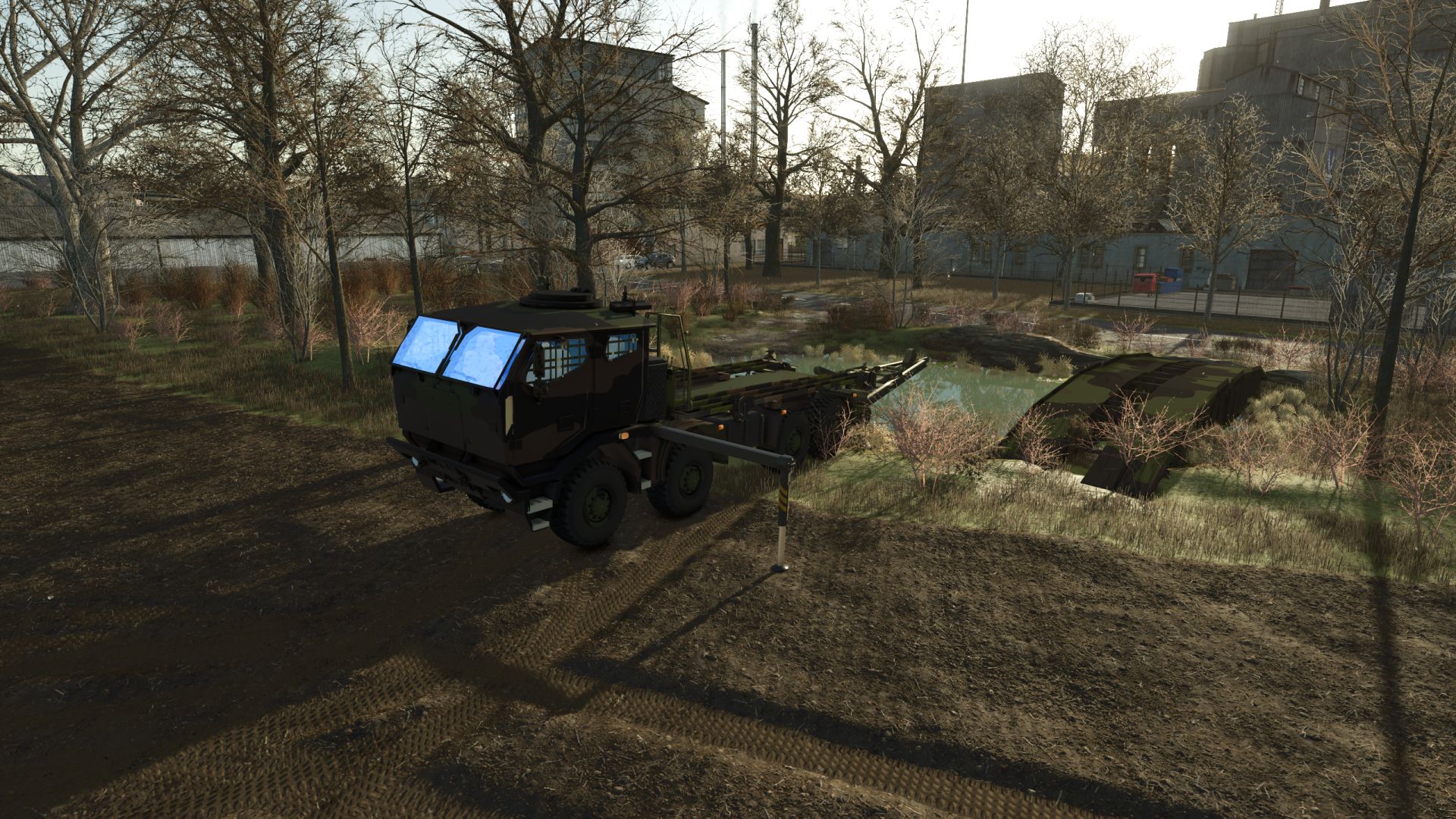
PMP-M “Pontifex” V1.0.0.0 PMP-M “Pontifex” (Military Logistic Mobile Bridge-Layer and Engineer Support Vehicle) Military Description The PMP-M “Pontifex” is a heavy-duty, high-mobility military logistics truck with an all-terrain configuration, specifically designed for combat engineer units. Its primary role is the transport and rapid deployment of floating or riverside tactical bridge sections to enable armored vehicles, tanks, and motorized columns to cross rivers, trenches, or destroyed waterways within the theater of operations. Key Specifications Chassis and Drivetrain: Employs a heavy military truck platform with reinforced all-wheel-drive traction (8×8 or 6×6 configuration depending on the variant), optimized to handle extreme structural loads and operate across muddy or uneven terrains. Bridge Deployment System: Equipped with a specialized hydraulic mechanism on the rear section for the autonomous assembly, launching, and recovery of folding pontoon sections or high-strength metal ramps. Load Capacity and Support: Capable of transporting structural components engineered to support the weight of Main Battle Tanks and heavy self-propelled artillery. Protection and Mobility: Features a reinforced cab equipped with CBRN filtration systems and light ballistic protection to ensure crew survival in advanced deployment zones under potential enemy fire. Summary and Tactical Utility Logistical and Offensive Continuity: Its deployment is vital for maintaining the advancement speed of mechanized forces, preventing tactical bottlenecks caused by the destruction of civilian infrastructure by the enemy. Engineer Versatility: Functions as a key combat engineer support asset, combining heavy road transport capabilities with rapid maneuverability to overcome water obstacles during high-intensity combat scenarios.
TATRA PMP-M “Pontifex” V1.0.0.0
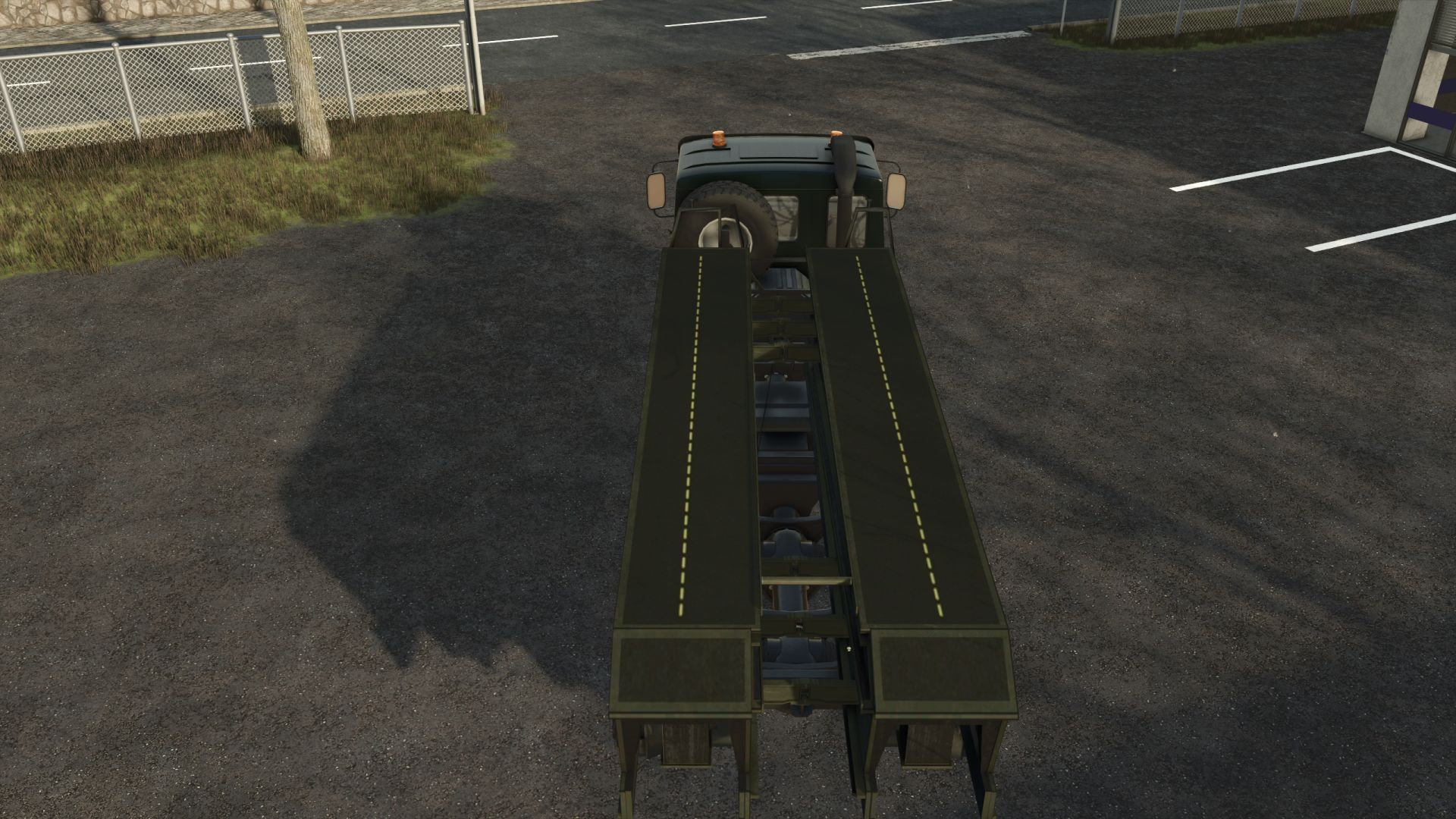
TATRA PMP-M “Pontifex” V1.0.0.0 PMP-M “Pontifex” (Military Logistic Mobile Bridge-Layer and Engineer Support Vehicle) Military Description The PMP-M “Pontifex” is a heavy-duty, high-mobility military logistics truck with an all-terrain configuration, specifically designed for combat engineer units. Its primary role is the transport and rapid deployment of floating or riverside tactical bridge sections to enable armored vehicles, tanks, and motorized columns to cross rivers, trenches, or destroyed waterways within the theater of operations. Key Specifications Chassis and Drivetrain: Employs a heavy military truck platform with reinforced all-wheel-drive traction (8×8 or 6×6 configuration depending on the variant), optimized to handle extreme structural loads and operate across muddy or uneven terrains. Bridge Deployment System: Equipped with a specialized hydraulic mechanism on the rear section for the autonomous assembly, launching, and recovery of folding pontoon sections or high-strength metal ramps. Load Capacity and Support: Capable of transporting structural components engineered to support the weight of Main Battle Tanks and heavy self-propelled artillery. Protection and Mobility: Features a reinforced cab equipped with CBRN filtration systems and light ballistic protection to ensure crew survival in advanced deployment zones under potential enemy fire. Summary and Tactical Utility Logistical and Offensive Continuity: Its deployment is vital for maintaining the advancement speed of mechanized forces, preventing tactical bottlenecks caused by the destruction of civilian infrastructure by the enemy. Engineer Versatility: Functions as a key combat engineer support asset, combining heavy road transport capabilities with rapid maneuverability to overcome water obstacles during high-intensity combat scenarios.
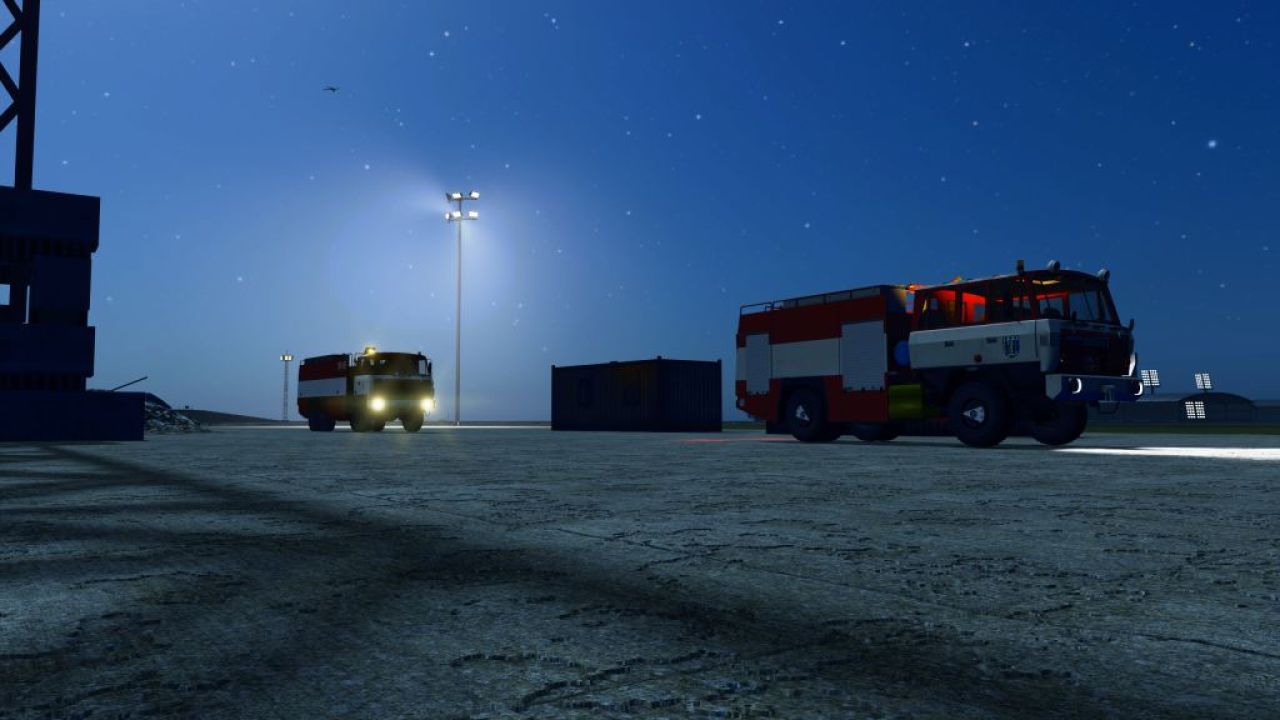
Tatra Fire Truck Pack V1.0.0.0
Tatra Fire Truck Pack V1.0.0.0 The Tatra Fire Pack is a collection of heavy-duty, all-terrain vehicles based on the iconic chassis of the Czech brand Tatra, specifically designed for extreme wildfire suppression, technical rescue, and logistical support in hard-to-reach areas, natural disasters, or military theaters of operation. Key Specifications All-Terrain Chassis and Drivetrain: Employs Tatra’s signature central backbone tube chassis with independent wheel suspension (4×4, 6×6, or 8×8 configurations), enabling superior wheel articulation and exceptional mobility across muddy, mountainous, or sandy terrain. Fire Suppression Capacity and Tanks: Structured with large-capacity modular tanks for water and foam concentrates, coupled to high-pressure pumps and remote-controlled roof monitors for rapid attacks against massive forest or industrial fires. Reinforced Cab and Thermal Protection: Crew cabs feature thermal radiation protection systems, insulation for dense smoke environments, self-contained breathing apparatus (SCBA) systems, and light shrapnel or structural hazard armor. Autonomy and Rescue: Equipped with high-power recovery winches, hydraulic rescue tools, high-intensity scene lighting, and watertight compartments for respiratory protection gear and CBRN suits. Summary and Tactical Utility Rapid Response in Extreme Terrain: Its rugged design allows it to reach areas where conventional fire trucks would get bogged down, making it indispensable for both civil protection in rural zones and firefighting units at airbases and high-criticality military installations. Logistical Versatility: Serves as a security bulwark against chemical, biological, or impact-induced fire emergencies, ensuring the operational continuity of deployed forces.
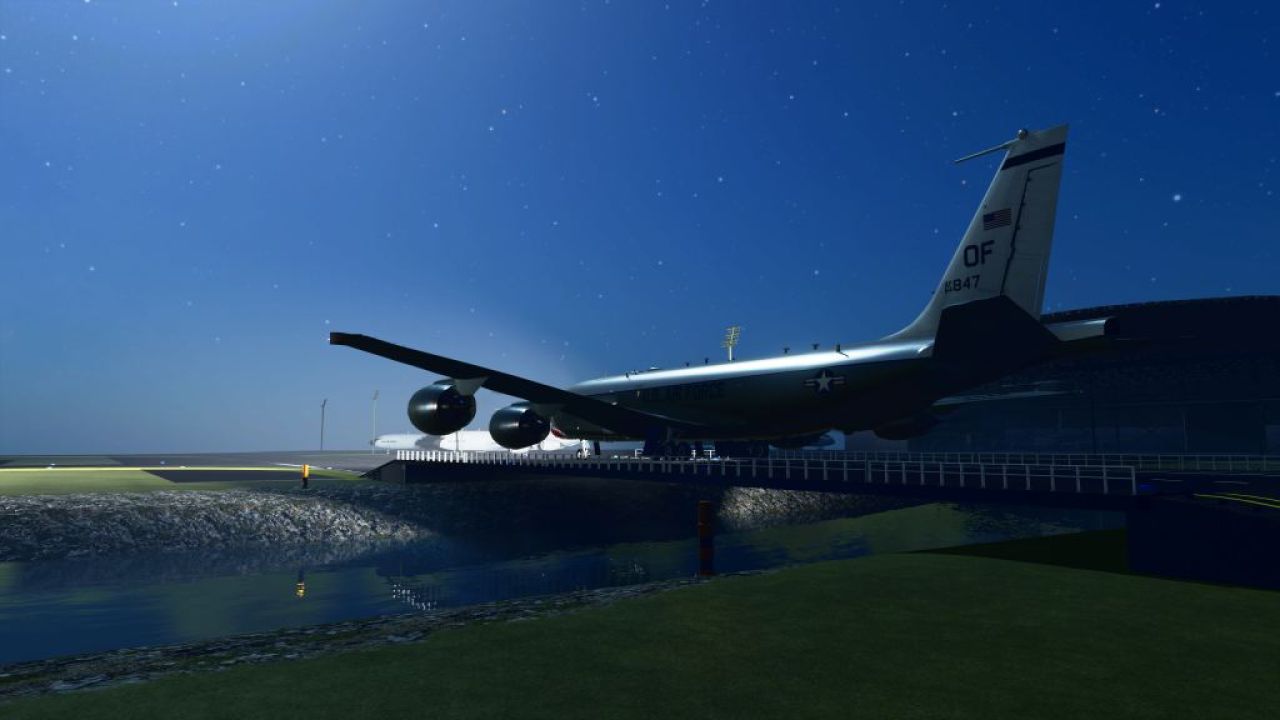
Boeing KC-135 Stratotanker V1.0.0.0
Boeing KC-135 Stratotanker V1.0.0.0 Boeing KC-135 Stratotanker: Comprehensive Technical and Strategic Description Introduction and Historical Background The Boeing KC-135 Stratotanker is a four-engine strategic military tanker aircraft developed and manufactured primarily by Boeing for the United States Air Force (USAF). Derived directly from the Boeing 367-80 prototype (the same lineage that spawned the successful Boeing 707 commercial airliner), the KC-135 made its maiden flight in August 1956 and officially entered active service in June 1957. For decades, it has established itself as the undisputed backbone of the Western world’s aerial refueling fleet, enabling the projection of global air power without relying exclusively on foreign air bases or intermediate stops. Technical and Structural Specifications Engine Configuration and Propulsion: Originally equipped with Pratt & Whitney J57 turbojet engines, the vast majority of the KC-135 fleet underwent a massive re-engining program, adopting CFM International CFM56 turbofan engines (designated in military service as the F108). This upgrade dramatically increased thrust, improved fuel efficiency by over 25%, and significantly reduced its acoustic footprint and pollutant emissions. Aerial Refueling System (Boom System): The tail section features a rigid, telescopically extendable flying boom aerodynamically controlled by a boom operator stationed facing rearward in the back of the fuselage. Additionally, many airframes have been adapted or equipped with probe-and-drogue systems to support aircraft from the US Navy, Marine Corps, or international allies. Payload Capacity and Cabin Space: The main fuselage deck not only houses massive internal structural fuel tanks capable of transferring over 90,000 kg of fuel, but it also features a reinforced floor capable of simultaneously transporting military palletized cargo and passengers, fulfilling a dual logistical and strategic airlift role. Multi-Mission Platform: Its versatile design has enabled the development of multiple specialized variants, such as the RC-135 for electronic intelligence and strategic reconnaissance missions (SIGINT/RC), and the OC-135 for observation missions under the Open Skies Treaty. Summary and Tactical Utility in the Modern Theater Global Force Multiplier: The Stratotanker’s primary role consists of exponentially extending the combat radius, loiter time, and weapons payload of strategic bombers (such as the B-52, B-1, and B-2), tactical air-superiority fighters, and airborne early warning (AWACS) aircraft. Mobility and Aeromedical Evacuation: Beyond its primary role as a flying gas station, the KC-135 has played a critical role in international logistics airlift operations, rapid deployment troop transport, and aeromedical evacuation (MEDEVAC) missions, transporting severely wounded personnel from distant theaters of operation to high-complexity medical centers.
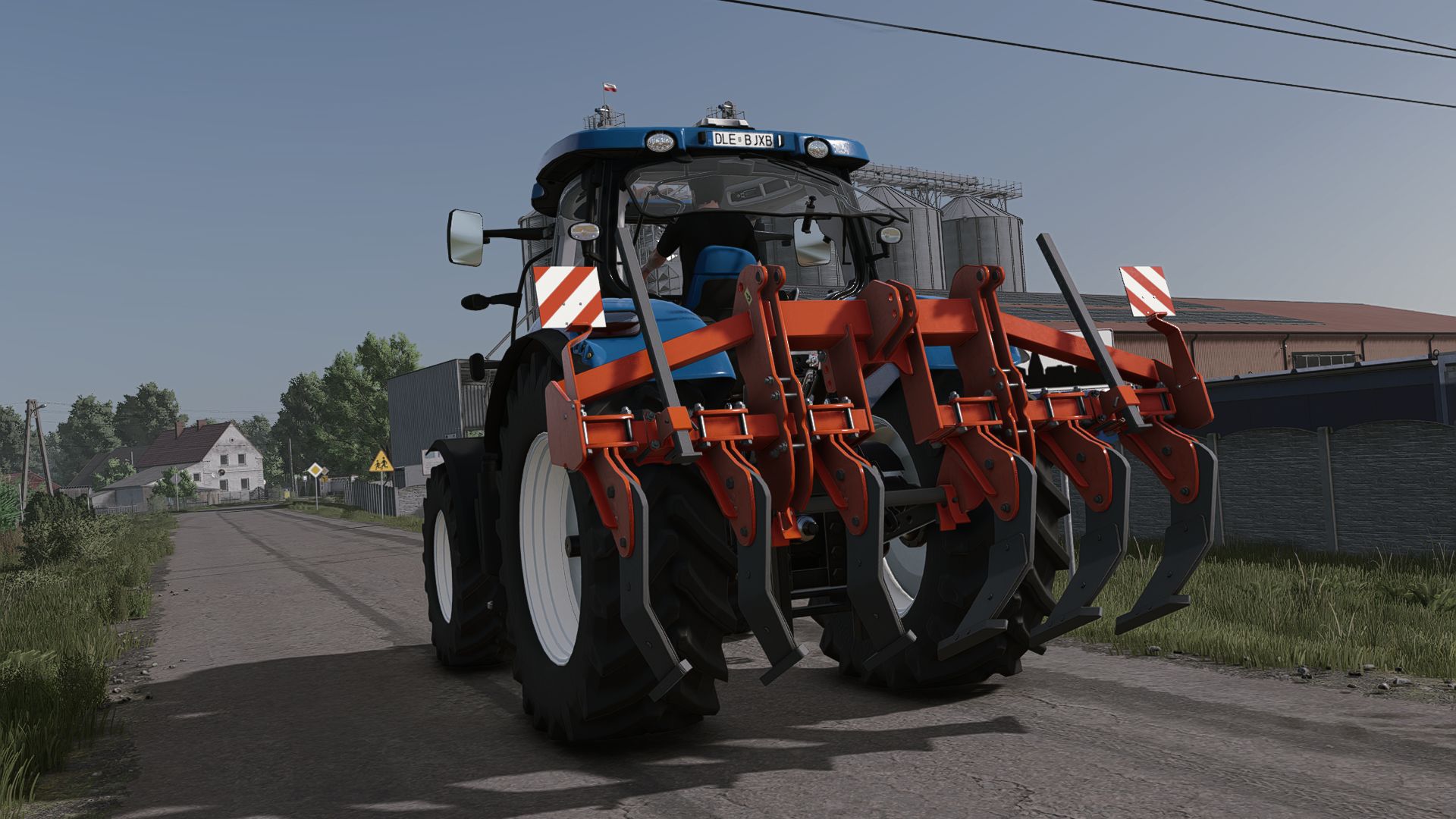
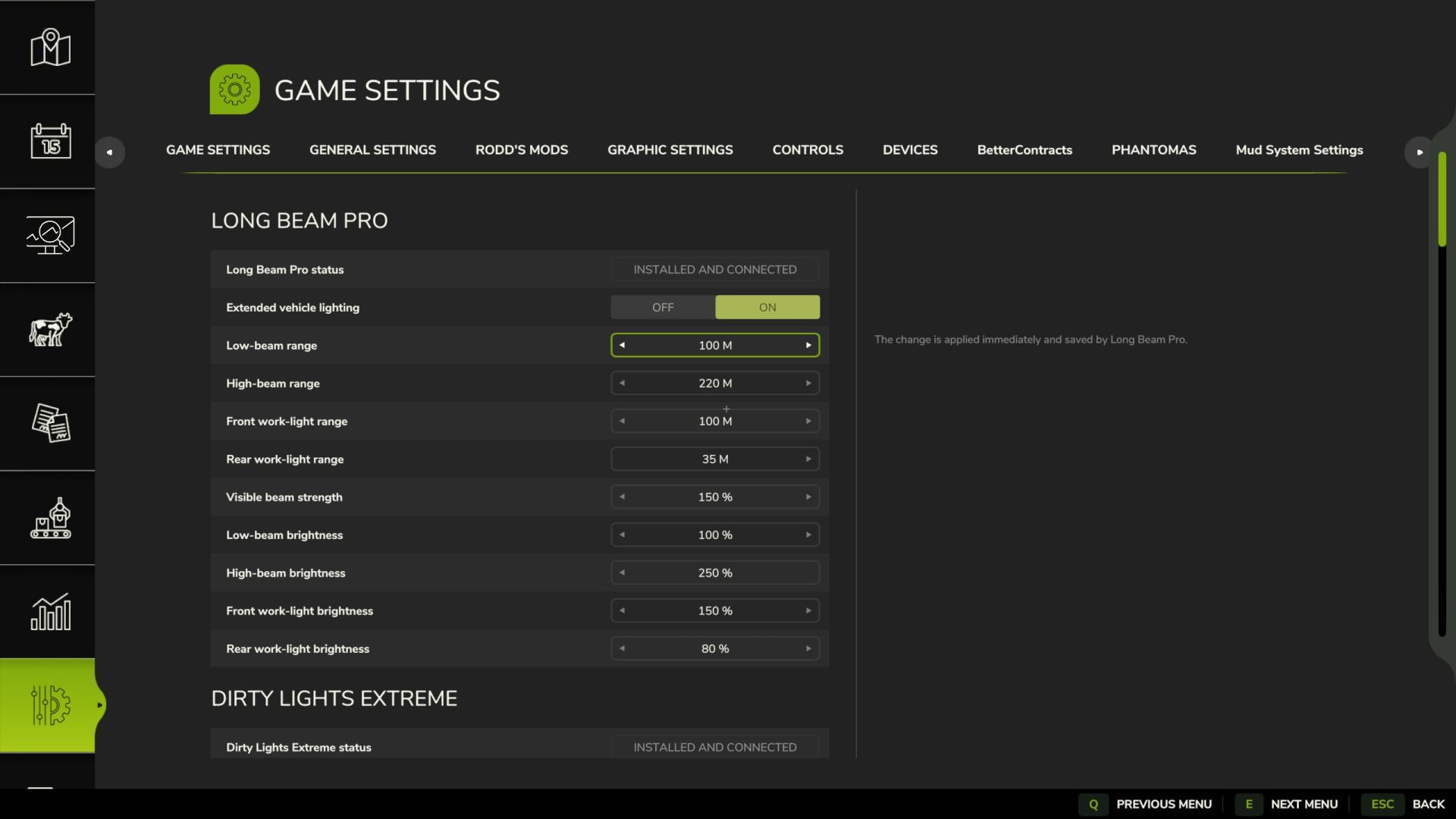
Extended vehicle lighting controls V3.1.2.0
Extended vehicle lighting controls V3.1.2.0 Standalone extended vehicle lighting with live controls for low beam, high beam, front and rear work lights, visible beam strength and real light brightness all configurable general menu
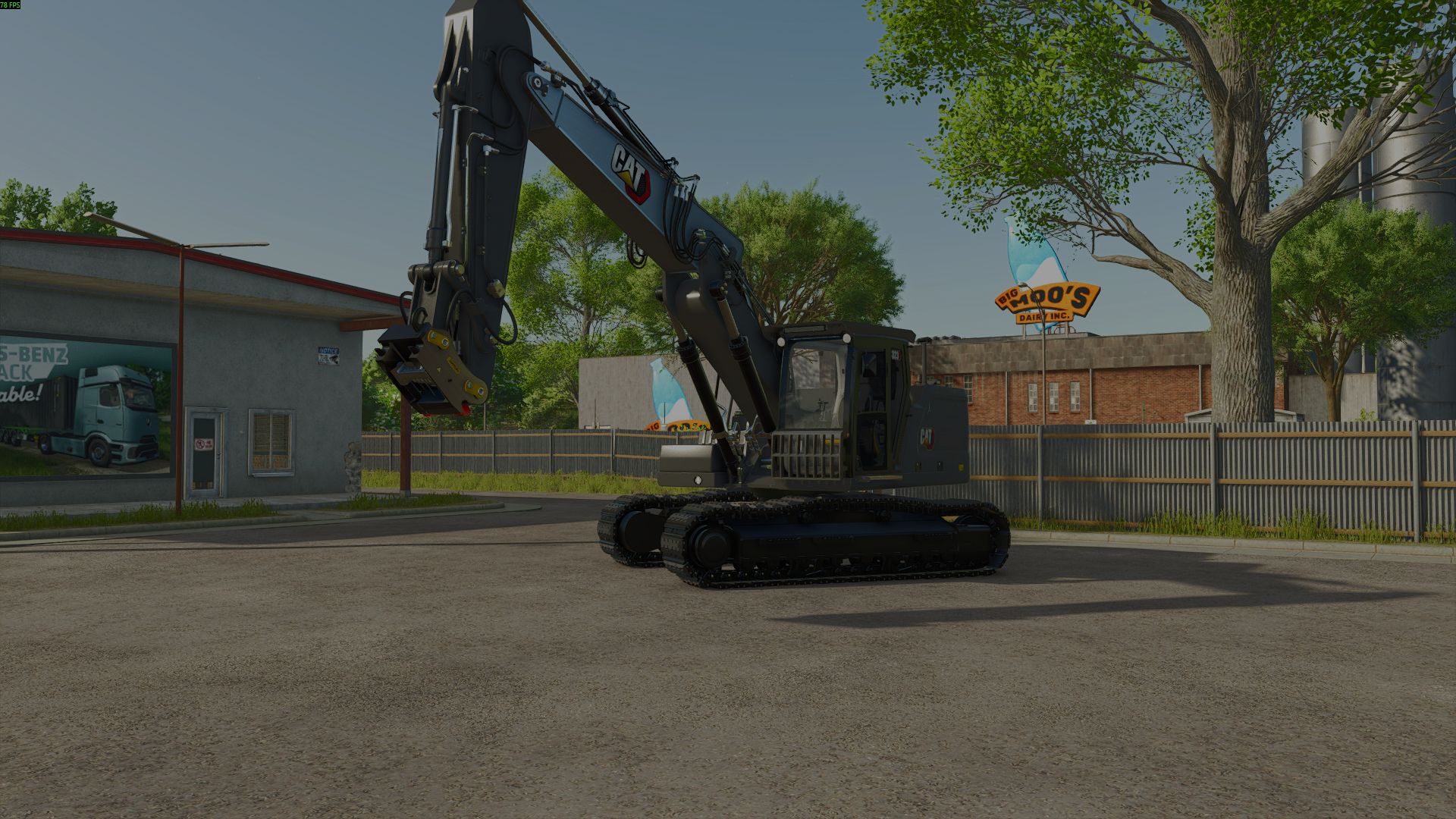
CAT 320/323 NG VA V1.0.0.0
CAT 320/323 NG VA V1.0.0.0 Since my CAT 320/323 NG is apparently being given around, I decided to publish it and my heartfelt thanks go to Maelius for the release to publish it Price: €320,000 Config: Grid LED bar Side step Number (320/323) Rubber pads
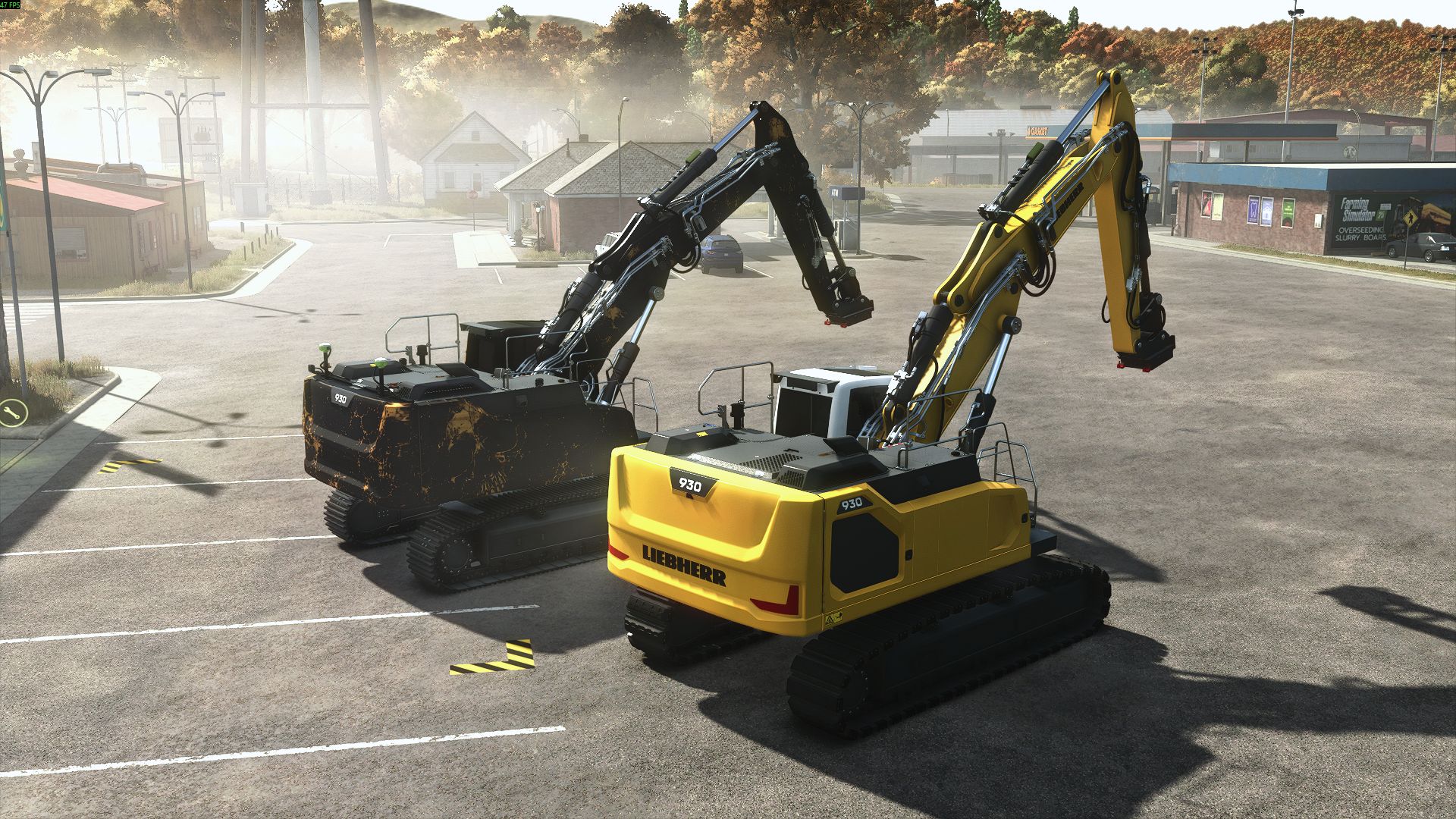
Liebherr R930 G8 Litronic V1.0.0.0
Liebherr R930 G8 Litronic V1.0.0.0 Here is my Liebherr R930 G8 Litronic Price: €250,000 Config: GPS bar Side kick Rockfall protection Additional light scraper Basic boom logo design Chain width
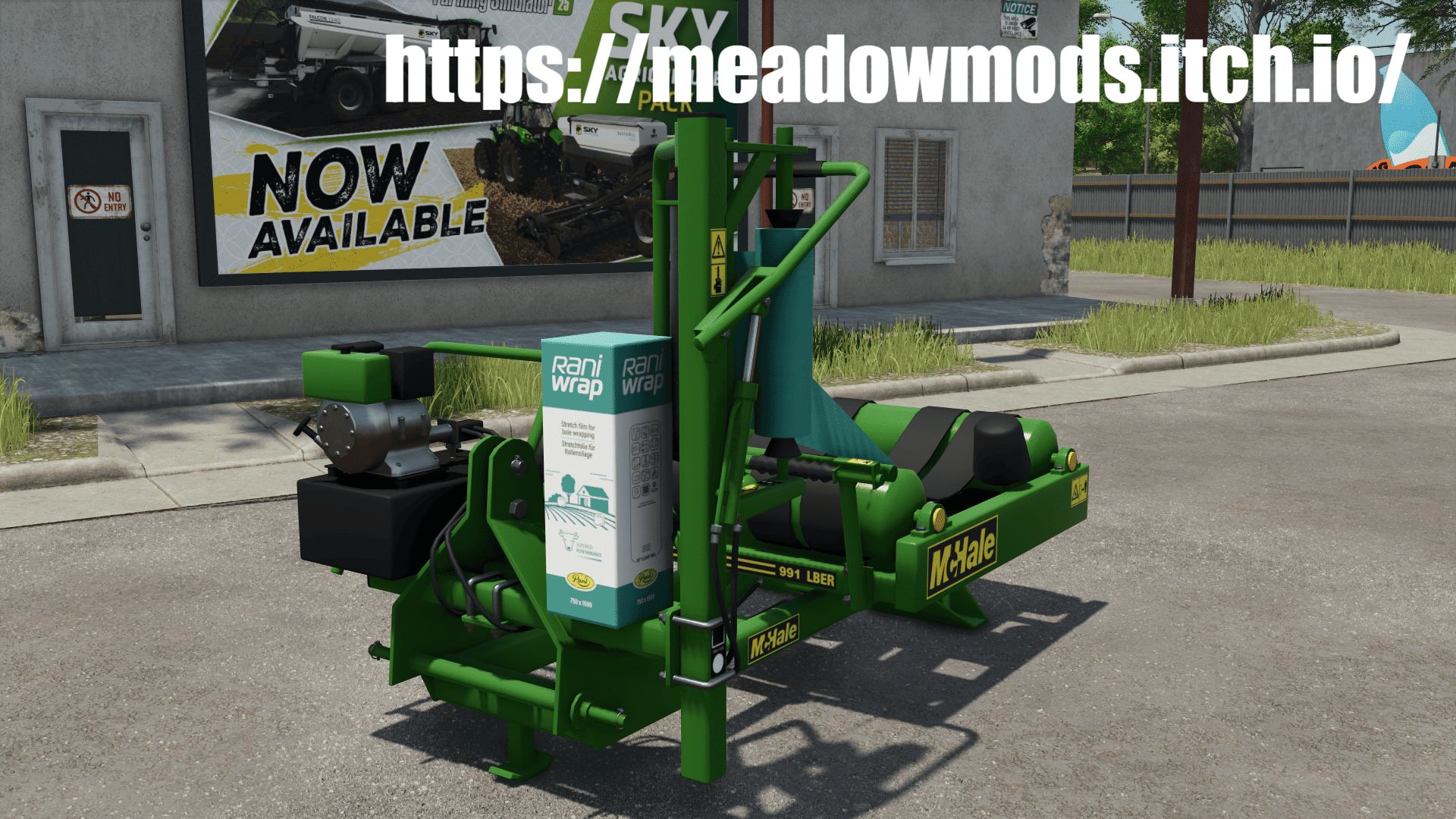
McHale 991 LBER V1.0.0.0
McHale 991 LBER V1.0.0.0 The McHale 991LBER is an economical and efficient bale wrapper designed to work with an independent power pack and infrared remote control, eliminating the need for a second tractor and operator. I’m aware a version of this was released on 10th June, but to put it politely, it left a lot to be desired. So I decided to take the time to build a version that actually does the 991LBER justice. Full FS25 material system — no more outdated diffuse materials Completely revamped model Custom dirt, wear & wetness masks Fully integrated FS25 rain/wrap system 125cm & 150cm bale support Custom sounds Improved visuals & detailing Built to work properly from the ground up This isn’t a quick conversion or a reskin — the McHale 991LBER has been properly rebuilt and brought up to full FS25 standards. Hopefully it gets plenty of use and, most importantly, gives the 991LBER the version it deserves.
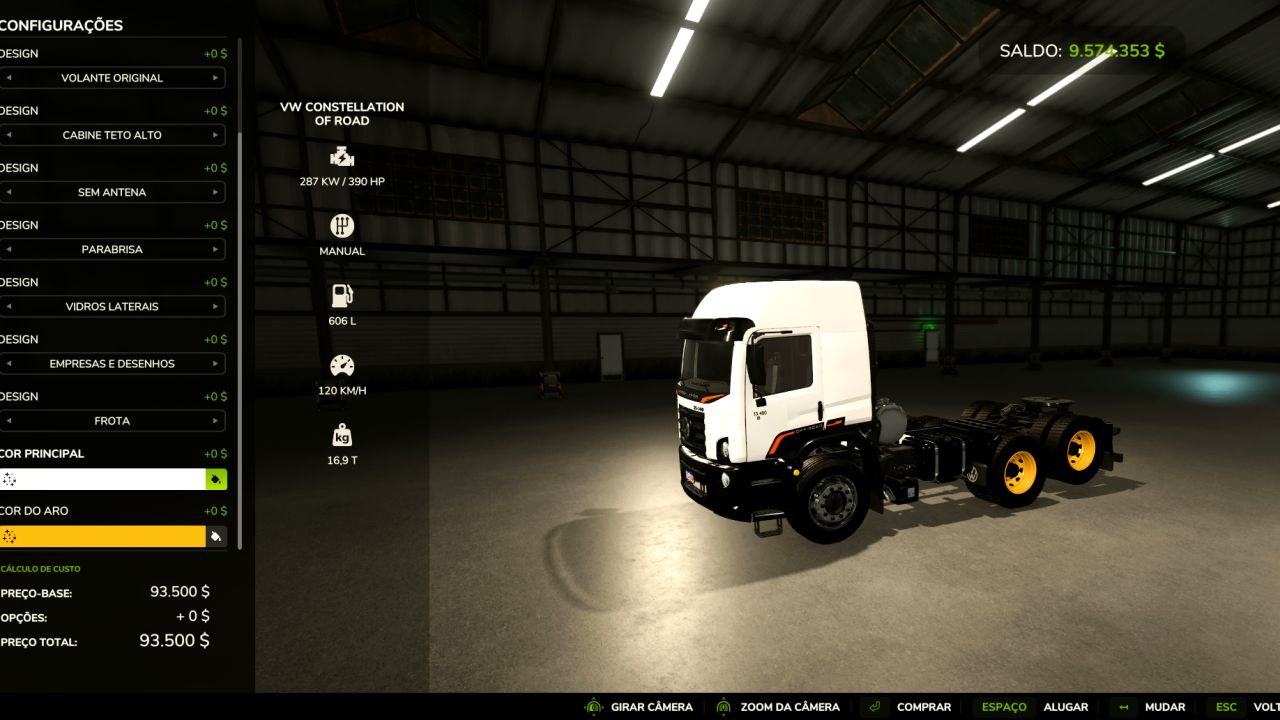
VW Constellation 24.280 Off-Road v1.0.0.0
VW Constellation 24.280 Off-Road v1.0.0.0 Power: 287 kW / 390 HP Transmission: Manual Tank capacity: 606 L Maximum speed: 120 km/h Weight: 16.9 t
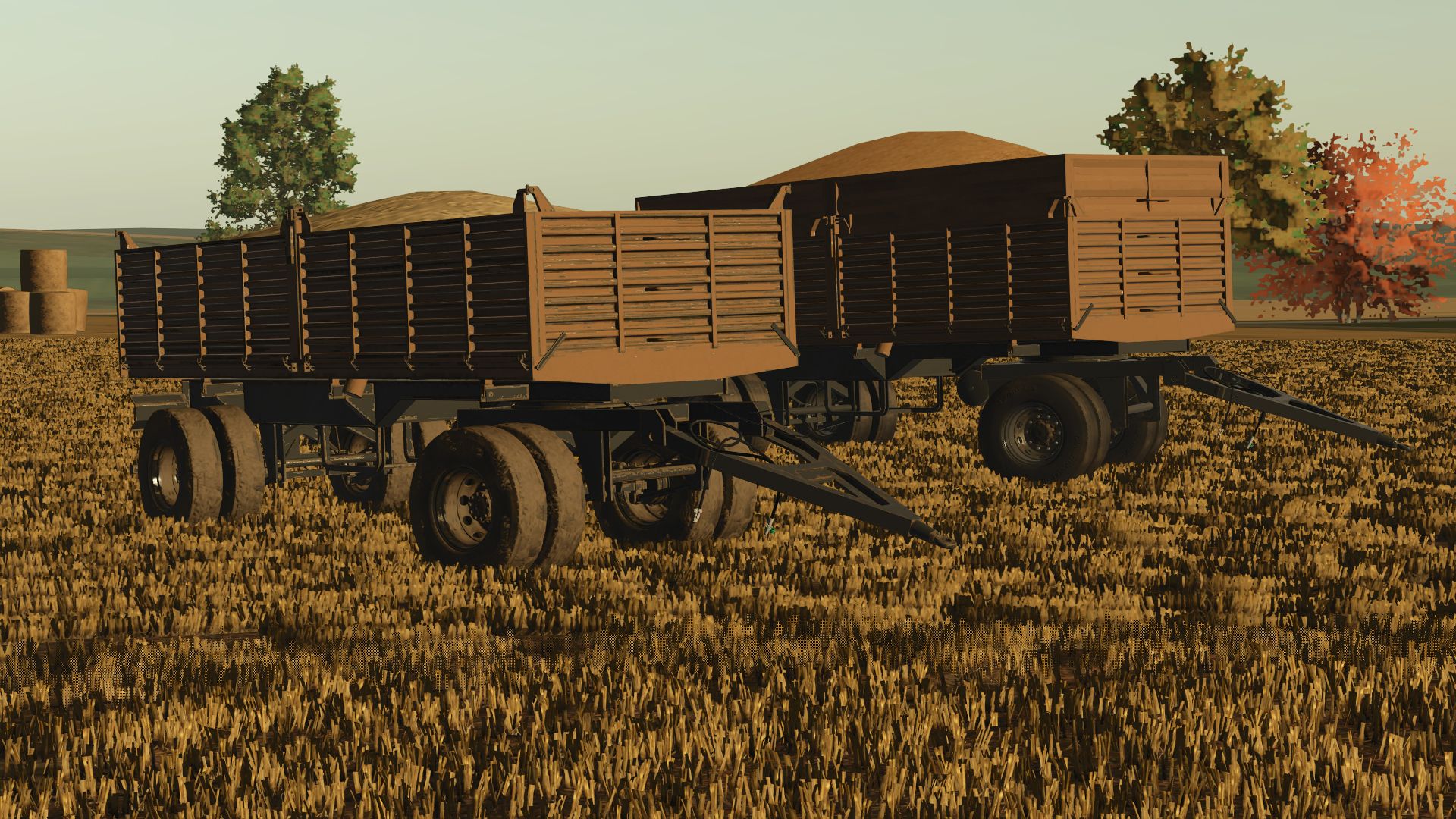
Gosa Kamionka V1.0.0.0
Gosa Kamionka V1.0.0.0 Category: Trailers Price: 5000-7200 € Capacity: 15000-20000 l (bale trailer also) Rims color configurations
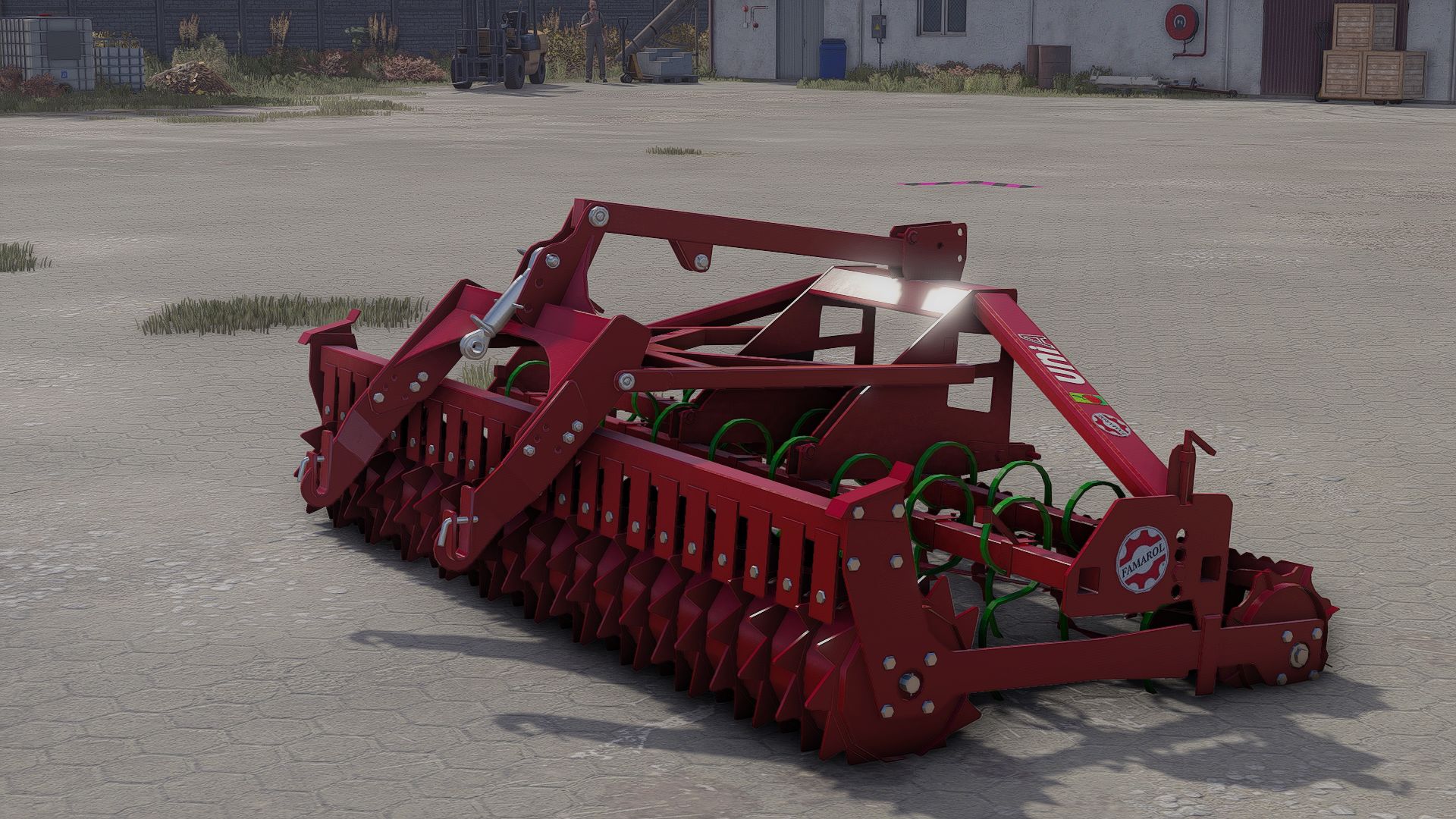
Unia Famarol 3m V1.0.0.0
Unia Famarol 3m V1.0.0.0 Price: 6200 $ Required power: 85 hp Working width: 3 m Working speed: 15 kph Configuration of the cultivation roller Tine configuration Possibility of attaching a seed drill
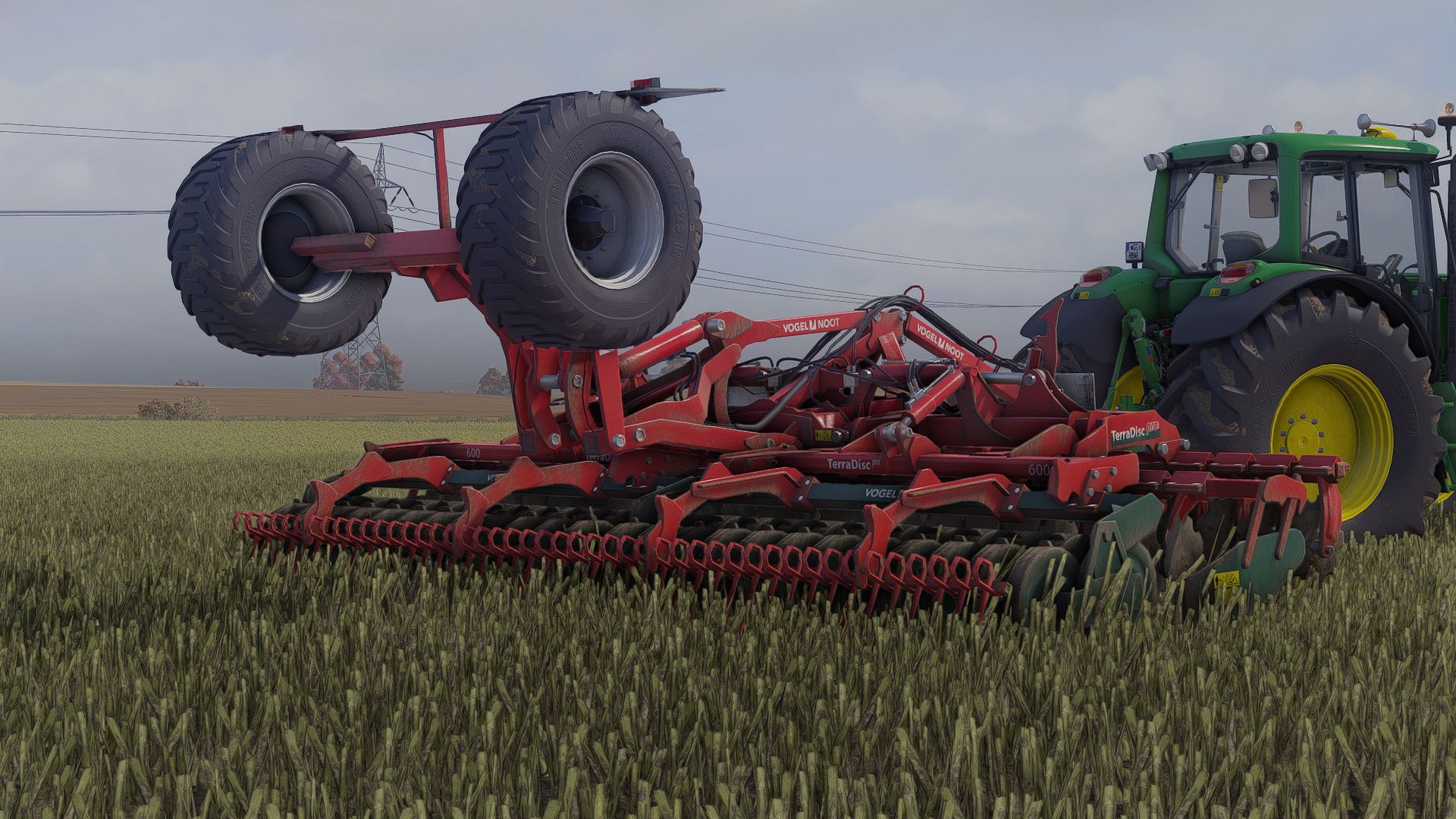
Vogel and Noot Terra Disc 600 V1.0.0.0
Vogel and Noot Terra Disc 600 V1.0.0.0 Price: €32,000 Maximum working speed: 18 km/h Power requirement: 180 HP Working width: 6 m
- 15 per page
- 30 per page
- 45 per page
- 60 per page
-
See more per page
Bigger pages, fewer clicks - and no ads anywhere.
Go Pro